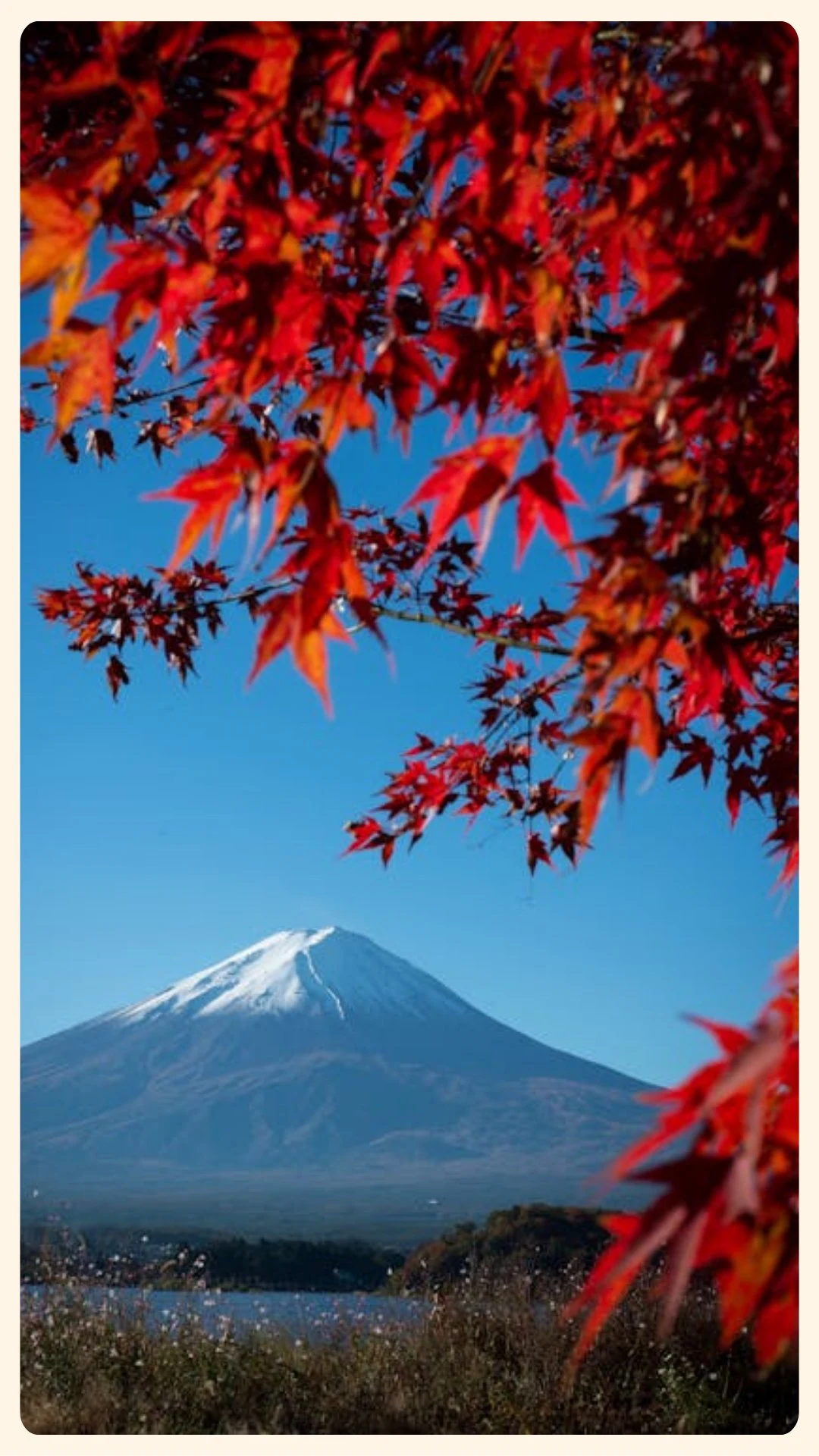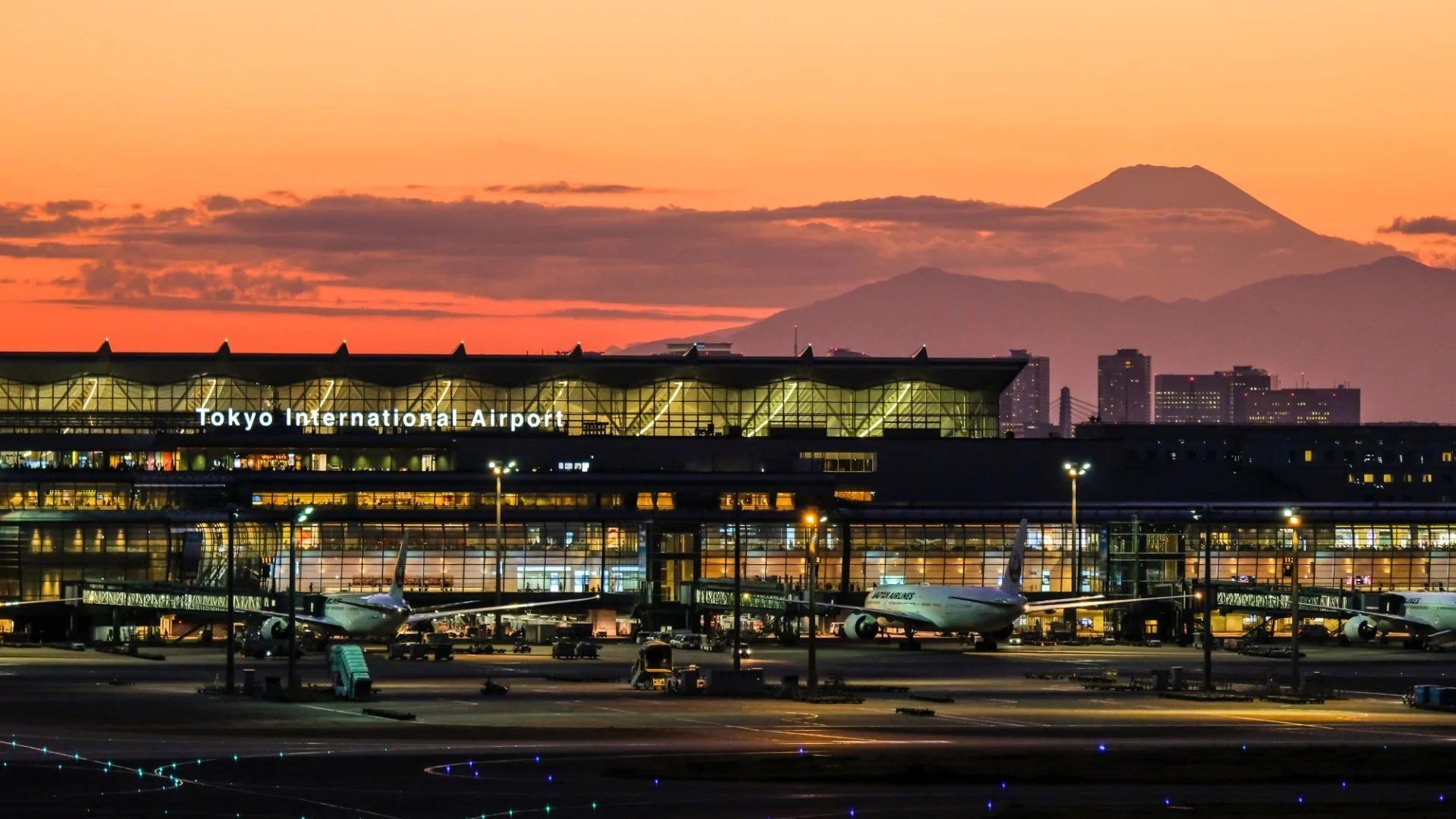
Haneda sits fifteen kilometers from central Tokyo, on land that was not there a century ago. Japan's Ministry of Post purchased fifty-three hectares of reclaimed bay in 1930 and opened an airfield the following August. Every expansion since has pushed further into Tokyo Bay. The runways are not on land that existed. They are on land Japan made.
This matters because it is why Haneda works. The Keikyu line reaches Shinagawa in eleven minutes. The Tokyo Monorail reaches Hamamatsucho in thirteen. When other major cities pushed their airports an hour from the center, Tokyo built more bay. The city and its airport have never been separated.
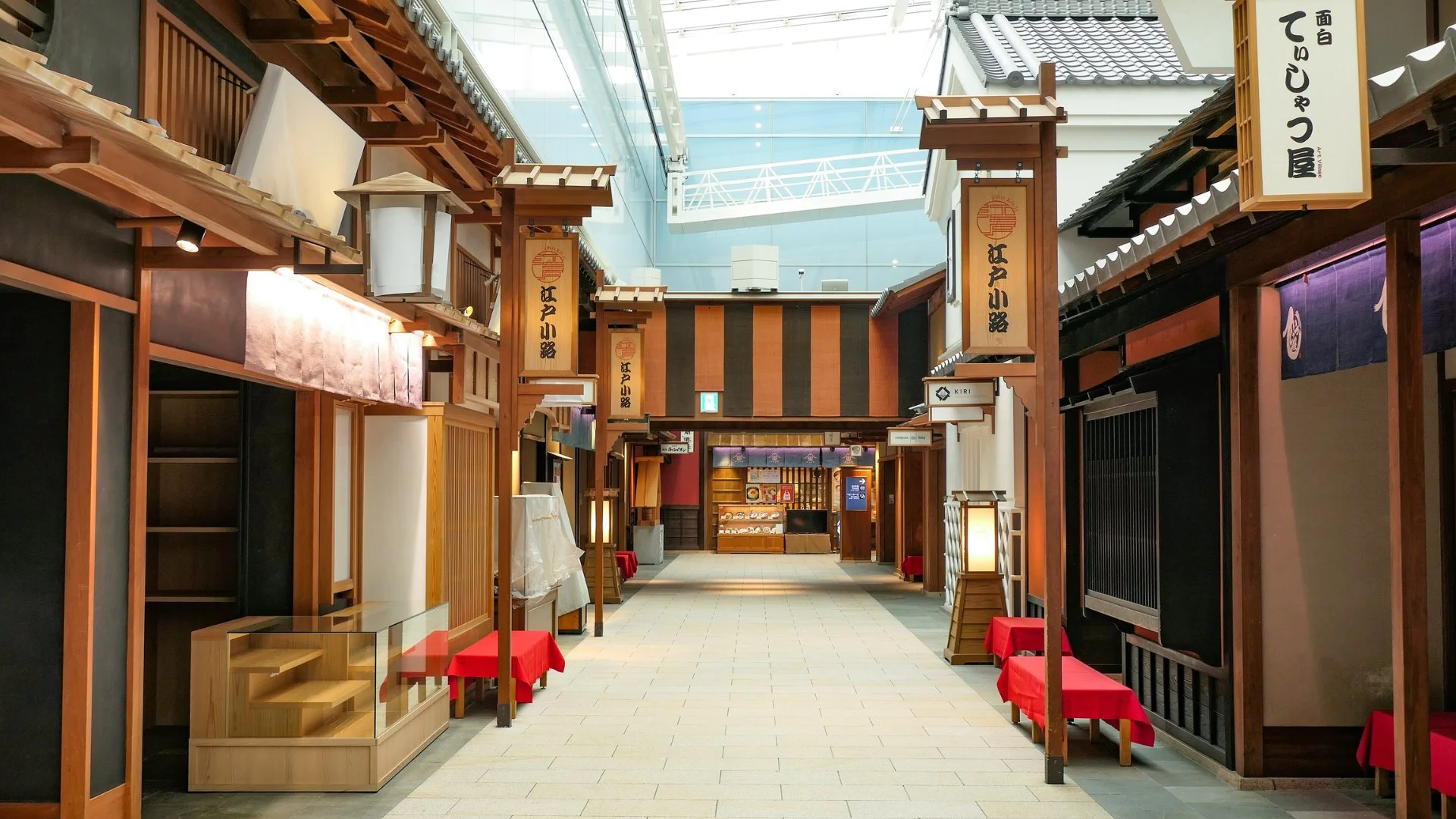
It is also the airport that built an entire Edo-period streetscape on the fourth floor of its international terminal, supervised by one of Japan's greatest Kabuki actors, constructed from natural wood by traditional master craftspeople. Not because an airport requires a four-hundred-year-old marketplace. Because Japan considers this a reasonable baseline.
For connections through Asia, Haneda is the Tokyo airport worth choosing. The international terminal runs twenty-four hours. The city is actually close. And when you arrive, you will find an airport that has been thinking about what to do with your time there.
An Edo streetscape inside a terminal.
Because Tokyo does nothing halfway.
Haneda's Terminal 3 contains a 17th-century Edo street. Not a themed corridor or a decorative facade. A full reconstruction: two named side streets, Okonomi Yokocho and Edomae Yokocho, a fortified Edo tower, and a working marketplace where the food is the same as it was four hundred years ago.
The construction was carried out by Nakamura Sotoji, master craftspeople who specialize in traditional tea ceremony structures made from natural wood. The mock Edo theater was built under the supervision of Kabuki actor Kanzaburo Nakamura XVIII. The walls are black plaster, known as Edo Guro, literally Edo Black. Red pillars echo Kanda Shrine. On the theater wall hangs a Hiroshige woodblock: Crowd in Shiba-cho, from the Famous Places of the Eastern Capital series.
But Edo Ko-ji is only the headliner. On the fifth floor, inside Tokyo Pop Town, sits the world's first airport planetarium. The Starry Cafe projects forty million stars across a dome above your table using a GOTO INC PANDORA projector, fifty centimetres in diameter. Entry costs 530 yen for adults. One drink is required. Programs run from eleven to twenty-two hundred. Popular shows sell out. Arrive before the one you want.
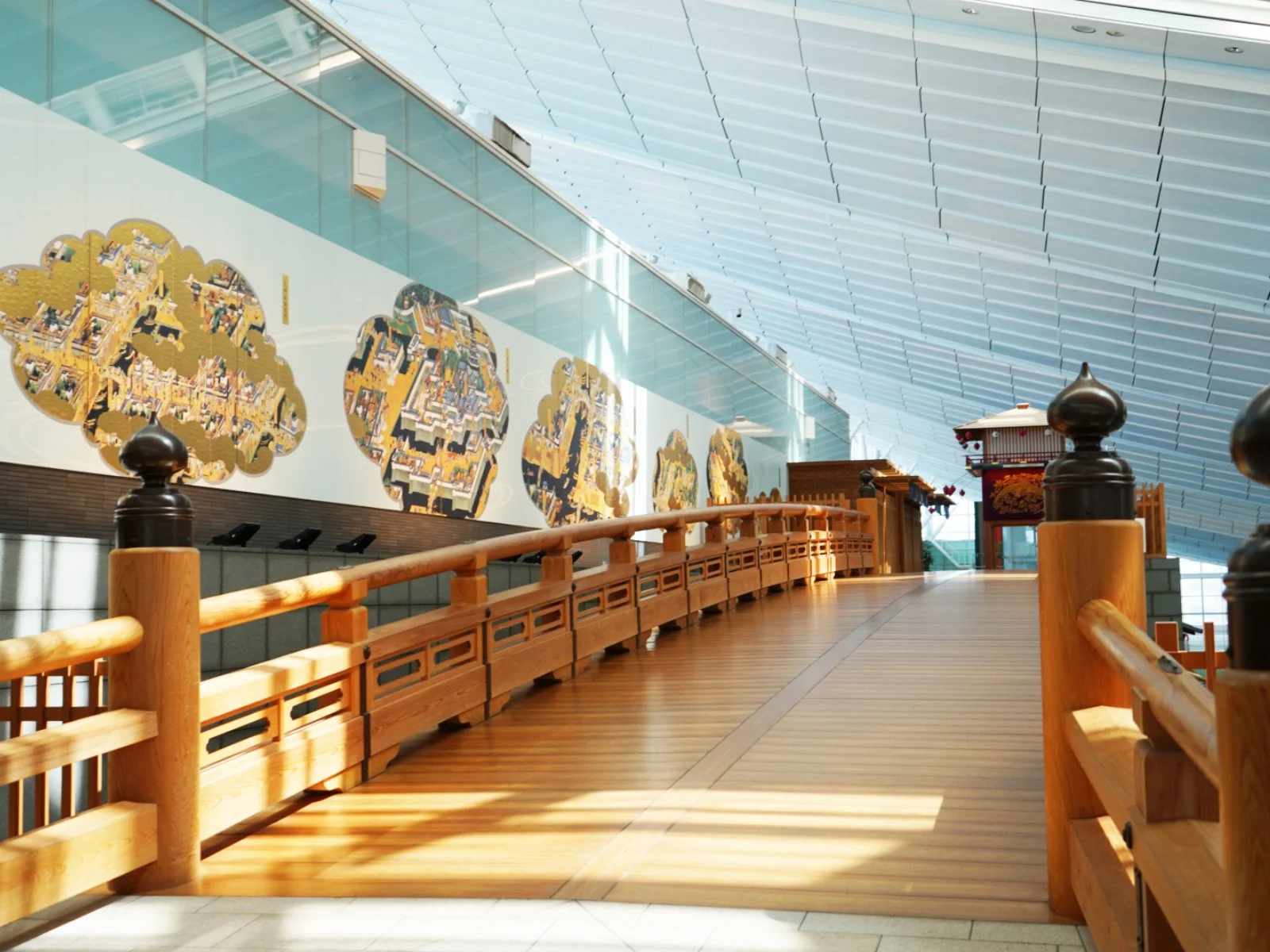
Above the market, a scaled-down replica of the Nihonbashi Bridge connects the fourth floor to the fifth, built from Yoshino cypress. The walls flanking it carry six-panel folding screens from the National Museum of Japanese History, depicting Edo under Tokugawa Iemitsu, the third shogun. The airport authority describes them as among the few surviving artifacts from the time Edo was founded.
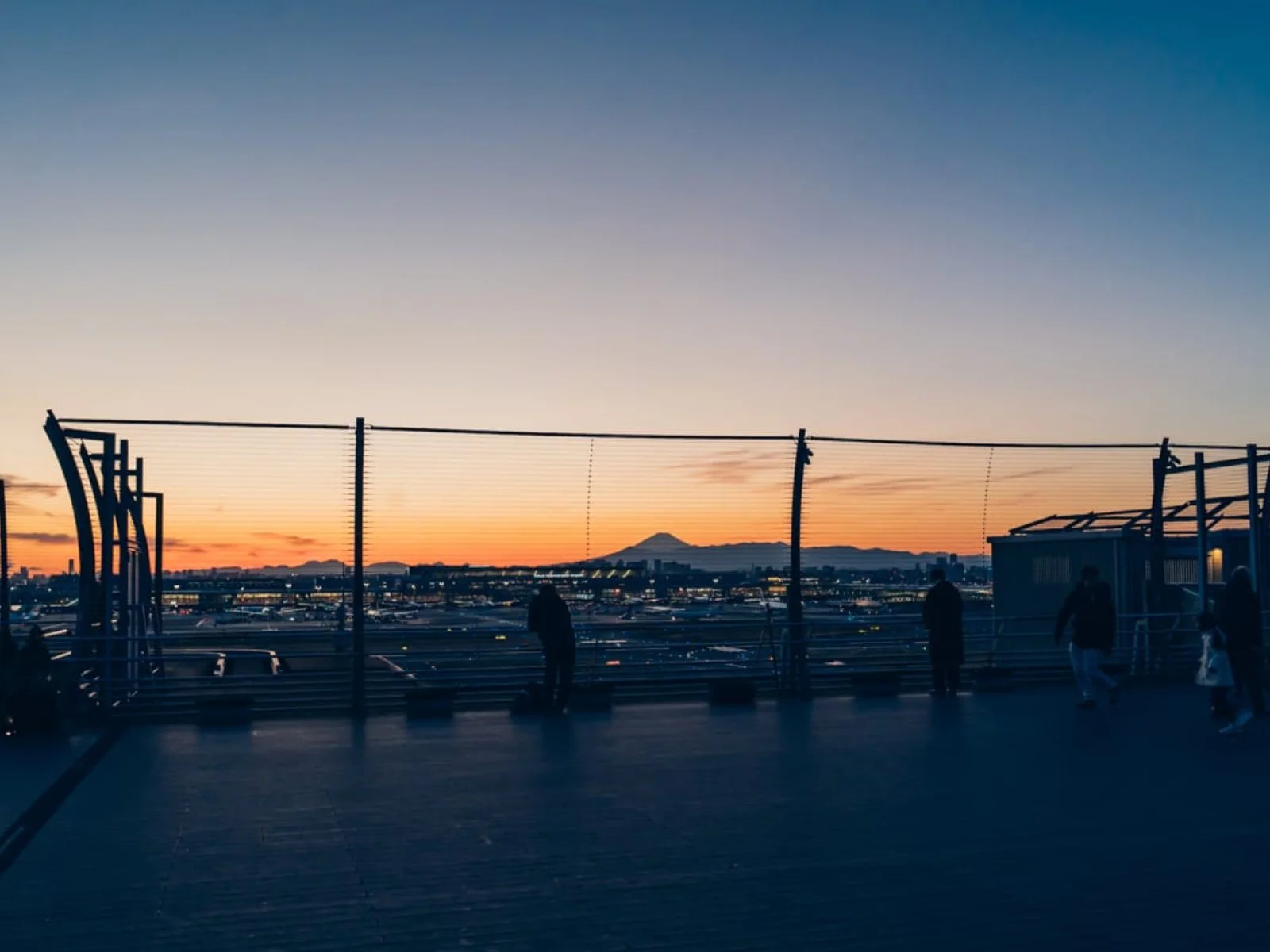
The observation deck is on the fifth floor, open twenty-four hours. All four of Haneda's runways are visible at once. The barrier is a cable fence, not glass, which brings you closer to the aircraft and makes sharper photographs. A raised wooden section, thirty centimetres higher, gives children a clear sightline. On clear evenings, Tokyo Tower and Tokyo Skytree appear behind the aircraft.
The secret to eating well at Haneda is knowing that everything worth eating is before security. Once you clear the gate, the airport is standard issue. Before it, Edo Ko-ji on the fourth floor of Terminal 3 is one of the better food environments at any airport in the world.
At Ariso, on the fourth floor, Edo-mae sushi is made to order at the counter. Edo-mae means Tokyo-style: lightly seasoned rice, fresh toppings, no rolls, no showmanship. Order from the iPad in front of you, available in English, Korean, and Chinese. It is mid-range by Tokyo standards, which means it is excellent by airport standards.
Hyakuzen, deeper in the market, serves seasonal Japanese dishes and always has a queue. At the far end of the street, Ogura specializes in oden: assorted ingredients simmered in a soy-based broth. Yakiniku Champion offers wagyu beef, including a Wagyu Beef Box using Japanese black wagyu that is sold exclusively at this terminal.
The fourth floor is landside. Drop baggage first, then eat, then clear immigration and security. If you are connecting from a domestic flight, take the inter-terminal shuttle to Terminal 3 and allow enough time before your security window closes.
Skip the chain coffee in arrivals. Find Saryo Itoen at the entrance to the Edo Market. It is a Japanese tea house. Order matcha. It comes with a tea-flavored parfait option that is a reasonable last act before a long flight over the Pacific.
Here is what the seasoned Haneda traveler knows that you do not.
First: the free transit rail pass. If you are transiting and need to change terminals, the Keikyu Airport Line and Tokyo Monorail are both landside. Ask at any Information counter for a Transit Boarding Ticket. It covers the inter-terminal rail at no cost and is available for all transfer types: domestic to international, international to domestic, and international to international. Most transit passengers take the shuttle bus and never learn this exists.
Second: the night transport gap. Both the Keikyu line and the Tokyo Monorail stop running around midnight. If your flight arrives after 10 PM or departs before 7 AM, there is no affordable train to the city. Taxis exist but cost between six thousand and eleven thousand yen to central Tokyo depending on destination. Terminal 3 is open twenty-four hours. Terminal 1 closes at midnight, as do Terminal 2's domestic areas. If you are waiting for an early morning departure and the domestic terminals are closed, Terminal 3 is where you go.
Third: everything worth doing is landside. After security at Haneda, you are in a standard airport. Edo Ko-ji, the observation deck, the Nihonbashi Bridge, Saryo Itoen: all before the gate. Build your Haneda time into the pre-security window, not the post-security one.
Fourth: Runway D adds taxi time. The fourth runway (05/23), completed in 2010, is a hybrid structure built partly over the Tama River mouth on elevated piers to preserve water flow. It is the most distant runway from the international terminal. Taxi time to Runway D can exceed thirty minutes. If you have a tight connection, budget time for this.
The worst thing about a long layover is the slow erosion of your dignity. The stiff neck, the dead phone, the slow realization that you have four hours and nowhere decent to put your body. Haneda handles this better than its reputation suggests.
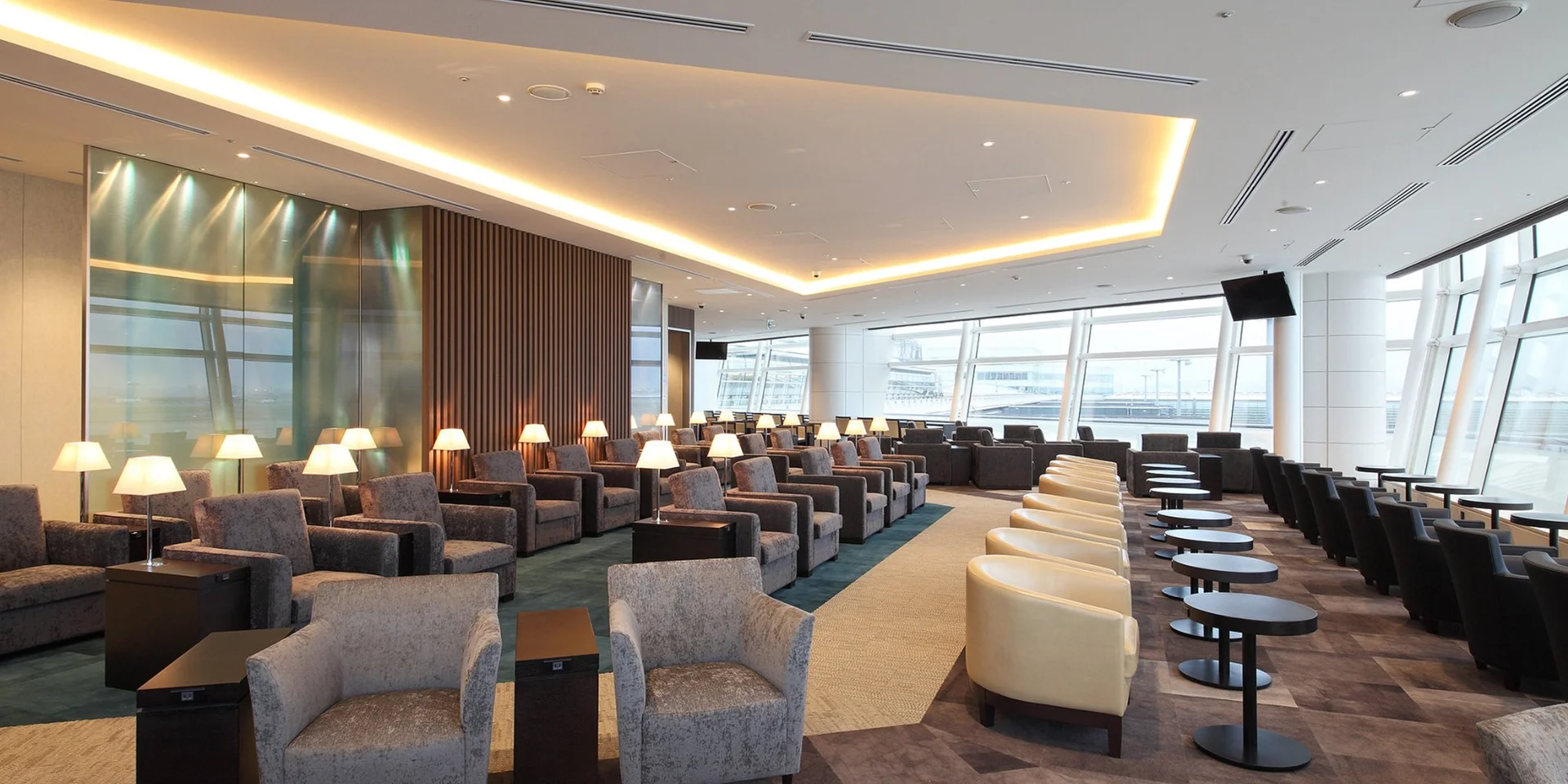
The Power Lounge Central, on the third floor of Terminal 3's departure lobby, is open to anyone for eleven hundred yen, roughly seven dollars. No airline card, no status required. It has seating, power outlets, and enough quiet to make a dent in the fatigue. For something more private, the Haneda Excel Hotel Tokyu is connected to Terminal 1 with proper rooms and access to showers even for short stays.
For families, the Terminal 3 observation deck is open at night and large enough for children to move freely, with aircraft landing close enough to hold attention without assistance. THE HANEDA HOUSE in Terminal 1 includes the Kitahara Collection toy museum with antique aircraft models, a dedicated children's area, and a model train section that loses adults as readily as it does children.
For business travelers: the TIAT Lounge on Terminal 3's fourth floor covers JAL, ANA, and major alliance partners with showers included. The Sky Lounge and Sky Lounge South handle overflow. For those without qualifying status, Raffine, the airport spa on the second floor of Terminal 3's arrival lobby, accepts walk-ins for massage and treatments. After a long-haul, this is a reasonable use of a layover hour.
You have two hours. Or four. Or eight. Or thirteen. Here is what to do.
Stay in Edo Ko-ji. Ariso for sushi. Observation deck. Saryo Itoen matcha. Back to the gate with the sense that you ate somewhere real.
Add TIAT Sky Road. Hyakuzen for seasonal dishes. Kitahara Collection toy museum in Terminal 1. Return via the free inter-terminal shuttle.
Keikyu to Shinagawa in eleven minutes. Walk to Shimbashi. Standing ramen bar. Transfer to Shibuya. Walk the crossing. Return in time for the observation deck at dusk.
Monorail to Hamamatsucho. Tokyo Station. Yamanote Line to Asakusa. Senso-ji temple. Tsukiji Outer Market for lunch. Return by 7 PM. Observation deck at night with Tokyo Tower and Skytree lit behind the aircraft. Edo Ko-ji dinner. Flight.
The Keikyu Airport Line runs from Terminal 3 to Shinagawa in eleven minutes for around four hundred yen, or to central Tokyo in under twenty-five minutes with a transfer. The Tokyo Monorail reaches Hamamatsucho in thirteen to eighteen minutes for five hundred yen. Both lines stop around midnight. A taxi to central Tokyo costs five thousand to eleven thousand yen depending on destination and time of day.
Haneda's photograph is the Terminal 3 observation deck at night.
Go to the fifth floor before your flight. Switch your phone to 0.5x wide angle. Wait for an aircraft on approach or taxiing along the lit strip below. Frame the plane in the lower third of the shot and hold. On a clear night, Tokyo Tower and Tokyo Skytree will both be visible in the background. Both lit. Both vertical. The aircraft livery in the foreground, runway lights in the middle distance, two towers in the back: they fit in one frame.
This is the photograph that does not look like any airport you have been to. This is Tokyo at the scale Tokyo prefers: large, illuminated, and quietly showing off. This is the shot you will open six months from now and remember exactly where you were standing when you took it.