T2 was built to be read. Mumbai Terminal 2 demands you look at them.
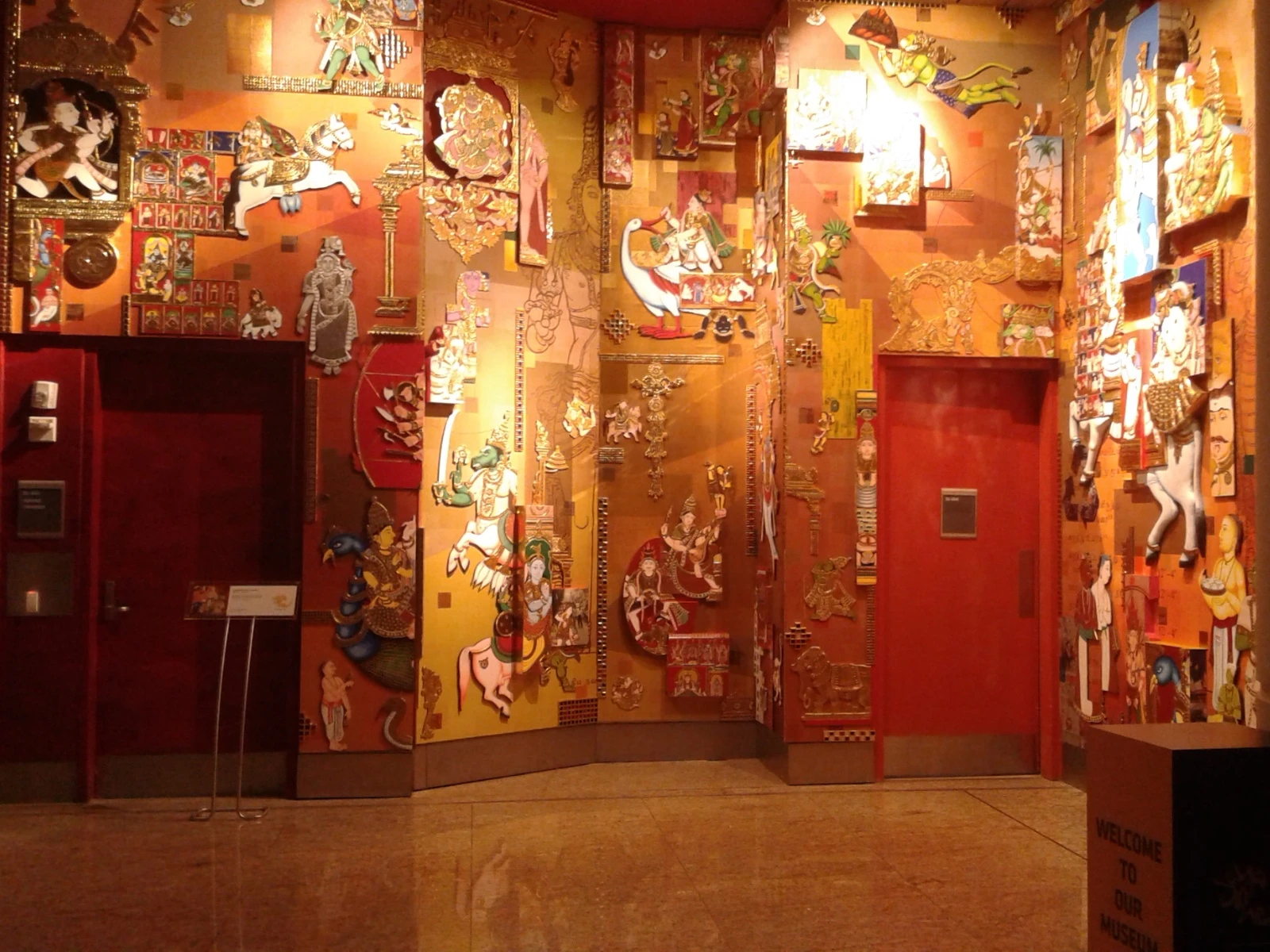
The Jaya He museum is not an exhibition you visit. It is the infrastructure you walk through. Three point two kilometres of art wall, seven thousand artefacts, five millennia of Indian history engineered directly into your path to the gate. Ancient sculptures and Mughal miniatures, tribal masks and temple chariots, textile installations designed by Manish Arora and Ritu Kumar, architectural salvage from every region of the subcontinent. The museum draws forty million passengers through its galleries each year. No museum in the world achieves those footfalls in a month. You do not route through Mumbai T2. You move through it.
The name is from the national anthem. Jaya He: victory be thine, glory be thine. Rajeev Sethi, one of South Asia's leading curators, built the programme to refuse the usual binary of art versus craft, traditional versus contemporary. Objects from five thousand years of Indian civilisation sit alongside commissioned works by living artists. None of it is in a room behind a door. All of it is in your way.
If you connect through Mumbai, arrive early. An hour before your usual check-in time is not enough.
The wealth of a subcontinent.
Carved into a three-kilometer gallery.
Mumbai's signature is the energy.
T2 is the financial capital of India at full sprint. The concourse does not pause. It moves: the suits and the families and the traders and the film people, all of them going somewhere, all of them in a hurry. This is not Heathrow's composure or Dubai's theatre of excess. This is Mumbai: confident, forward, unapologetic, and always moving fast.
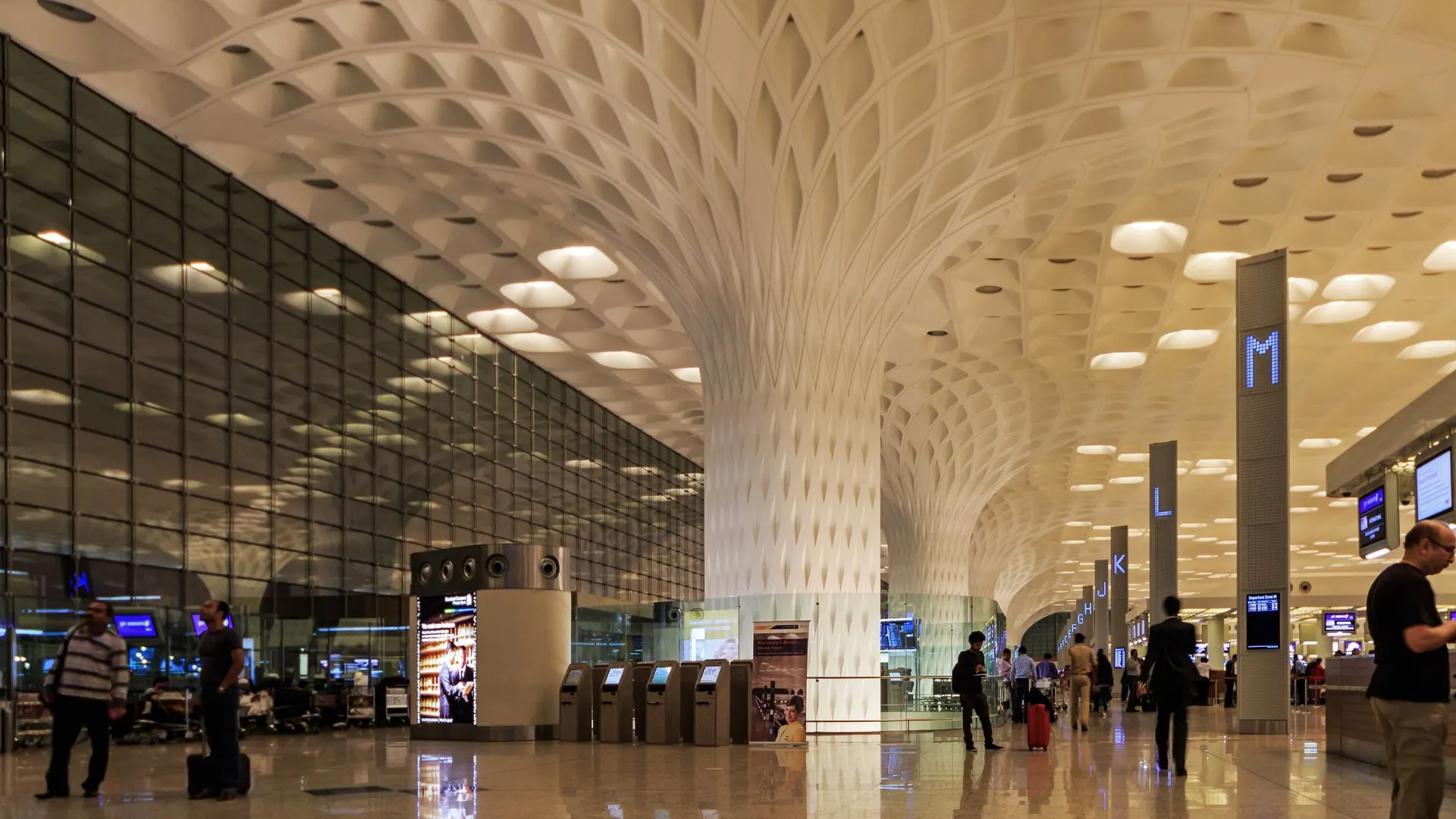
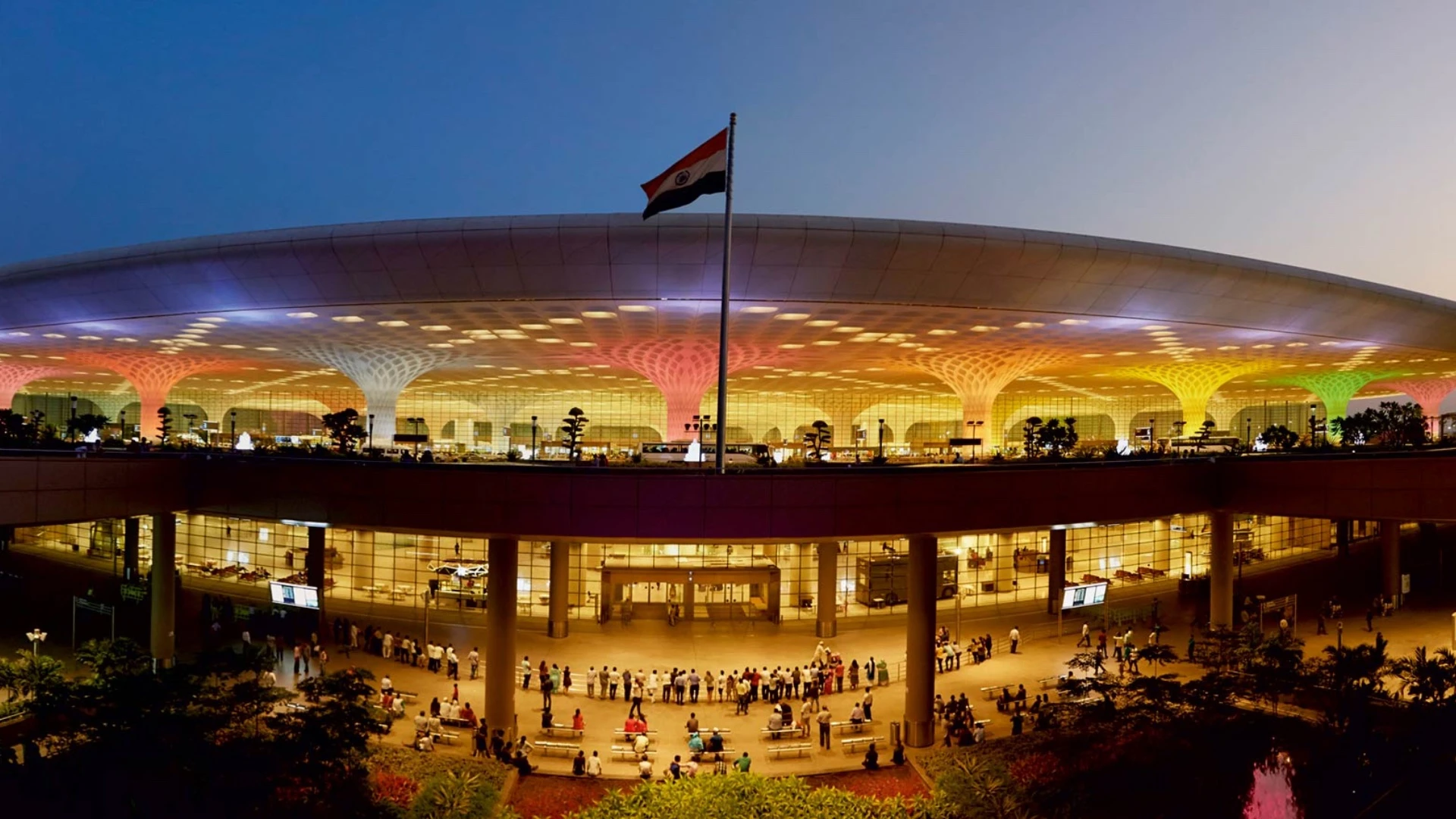
The building tries to keep up. SOM designed the T2 roof around thirty mushroom columns spreading into a ceiling of peacock-eye coffers, each inset with dichroic glass that scatters colour across the concourse as the light shifts. The ArtBeat of New India museum runs the length of the terminal, a 3.2-kilometre corridor holding more than five thousand artefacts and a hundred art installations. Architectural carvings, bronzes, ritual objects, textiles. One of the largest public art programmes at any airport on Earth, integrated into the passenger journey so you walk through it on your way to the gate.
The retail at Mumbai does something no other hub airport does. Fabindia sells handloom kurtas and block-print cottons airside. Manyavar has sherwanis for the diaspora flying home for a wedding. Forest Essentials and Kama Ayurveda carry cold-pressed oils and Ayurvedic formulations that are genuinely hard to find anywhere else at an airport. Amrapali Jaipur sells temple jewellery in silver and semi-precious stone. You can board a flight to London having bought nothing that isn't Indian.
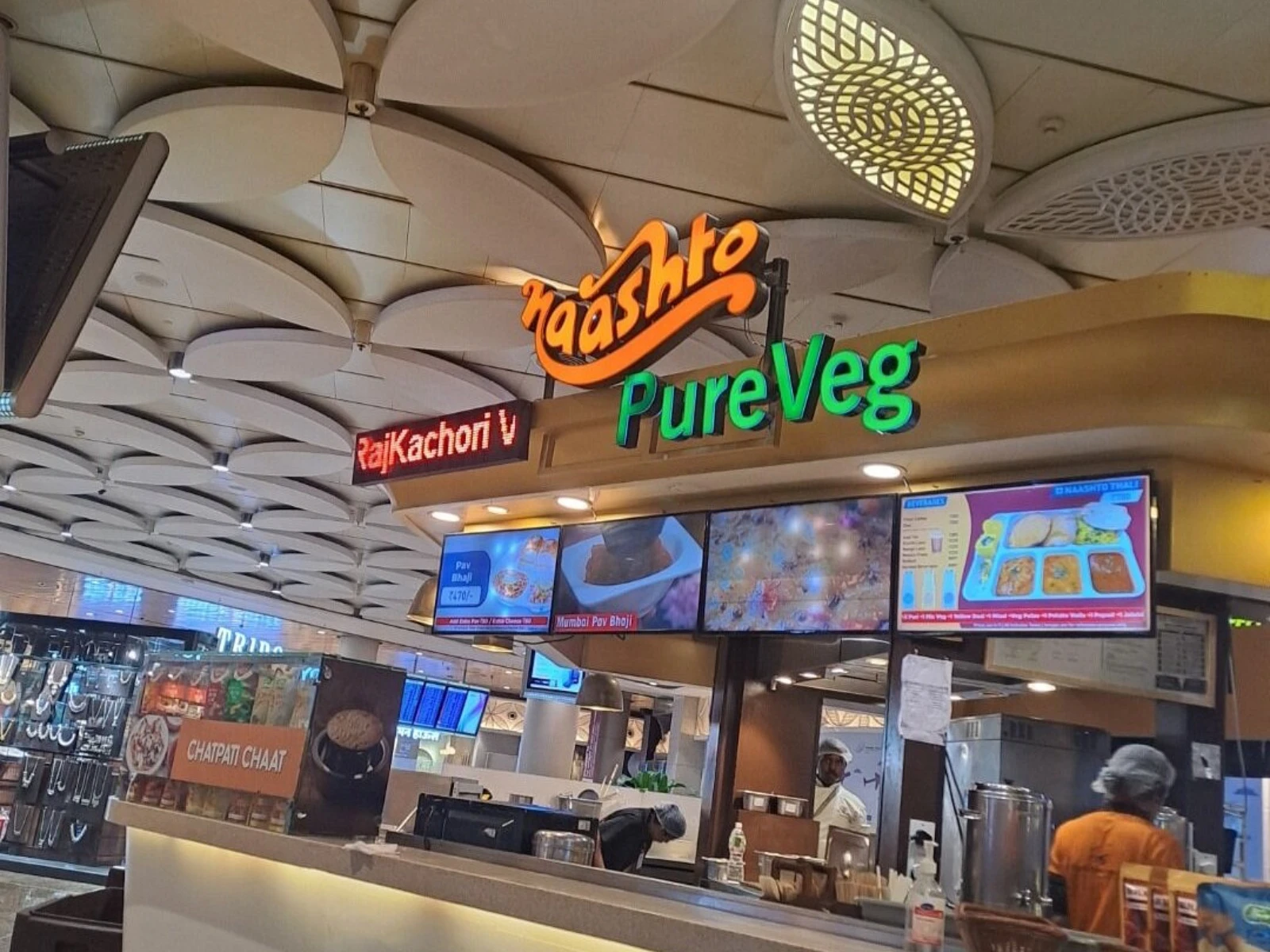
The secret to eating well at Mumbai T2 is to eat Mumbai rather than eating airport. The food that defines this city costs almost nothing and is available, entirely unchanged from the street version, fifty metres from the international departure gates.
Walk to the Udaan Yatri Cafe near the domestic departure end of the terminal. It serves the same ten-rupee chai you find on every Mumbai street corner, and twenty-rupee vada pav: a deep-fried potato fritter in a soft bread roll, pressed with dry garlic chutney and green chutney, the singular Mumbai snack. The food is not an airport version of itself. They are the food. Street prices, inside an international terminal. Drink the tea in one of the small glasses. Eat the vada pav without a plate. This is how it is done.
For a longer meal, the premium restaurants in the international zone serve Konkan thali, the coastal Maharashtra feast: fish curry, solkadhi, steamed rice, and accompaniments arrived at through a geography that runs from Goa to Ratnagiri. Order the full thali, which is designed to be eaten in a particular sequence. The kitchen will tell you the order if you ask.
For duty-free shopping worth the detour, the three Jaya He stores in T2 sell arts and crafts from across the subcontinent: textiles, ceramics, jewellery, and the kind of handmade objects that cannot be found in Delhi or on MG Road. They are the retail extension of the museum programme. Browse them the way you would browse a gallery shop after a good show.
For coffee, skip the international chains entirely. The cafe at the GVK Lounge makes a proper filter coffee: dark roast, slow extraction, served in the right glass. Two dollars. It costs what it costs in the city, because someone decided it should.
Here is what the seasoned Mumbai traveller knows that you do not.
First: the Pranaam Service. At departures, Pranaam agents meet you at the terminal entrance, carry your bags, fast-track you through check-in and immigration, and deliver you directly to the gate. At arrivals, they meet you at the aircraft door, process your immigration documents, and hand you your bags at the kerb. It costs around thirty dollars. For a family with children or anyone managing a tight connection at India's second-busiest airport, it removes the single most stressful part of the journey. Most international passengers do not know it exists.
Second: the Jaya He Safari. A free guided tour of the art installations runs in the departures zone. You can also download the airport app and walk the programme as a self-guided audio tour, with commentary on individual artefacts written by Rajeev Sethi's curatorial team. The tour is structured around the six thematic sections. Budget forty-five minutes if you do it properly. Budget an hour if you want to stop.
Third: the Aqua Line. Mumbai's first underground metro, Line 3, opened its T2 station in October 2024. A covered pedestrian bridge from the station to the terminal opened August 2025. The line runs south through BKC, Worli, and on to Cuffe Parade, bypassing every surface road and all the traffic on them. This is the answer to a problem travellers have complained about for decades.
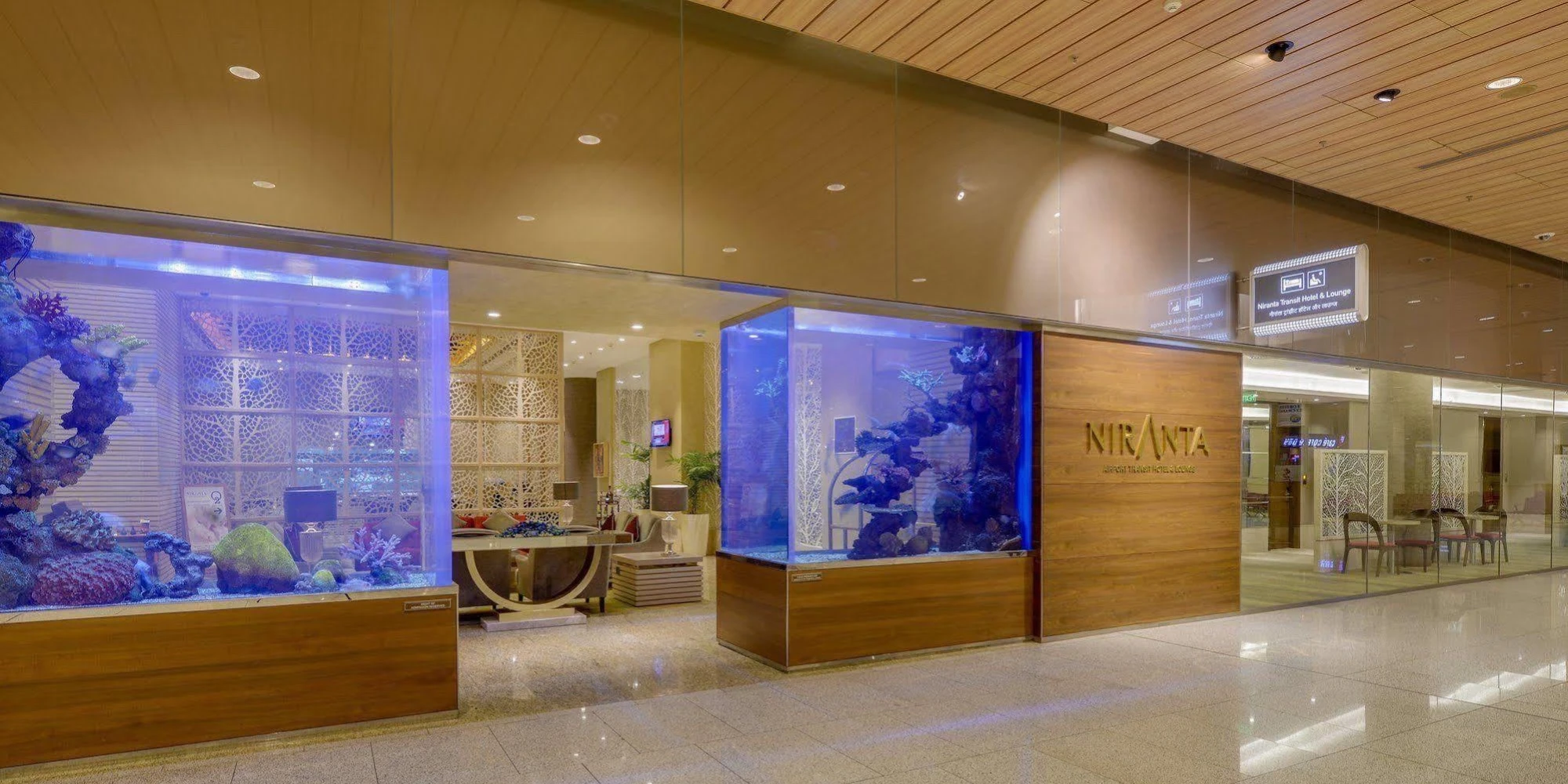
Fourth: the Niranta Transit Hotel is inside the terminal airside, which means it requires no immigration clearance. Rent a room by the hour. A proper bed, a high-pressure shower, soundproofing. Board your next flight from thirty metres away.
Mumbai T2 was not built as a transit facility. It was built as a building. The difference is visible in how it handles the hours in between.
The Niranta Transit Hotel sits airside, which means no immigration, no queuing, no customs. Rooms are rented by the hour with a proper bed and a proper shower. For a transit passenger on a six-hour layover between a red-eye and a connecting flight, this is the practical solution. You sleep, shower, and step back into the concourse. Your gate is thirty metres away.
T2 operates as a combined domestic and international terminal, which means families can access the full range of food and facilities regardless of whether their onward flight is domestic or international. The concourses are wide by Indian airport standards, with seating zones along the art corridors that function as quiet resting areas without requiring lounge access.
The GVK Lounge in the international zone is the premium anchor, with the gallery-facing window position its best feature. For business travellers without lounge access, the terminal's open concourse seating along the Jaya He wall is genuinely pleasant. The art reduces the sense of wait. You are not sitting in an airport. You are sitting in a museum that happens to have departure boards.
You have two hours. Or four. Or eight. Or thirteen. Here is what to do.
Stay airside. Walk the Jaya He corridor slowly. Drink the ten-rupee chai at Udaan Yatri Cafe. Eat the vada pav. Look at the ceiling. Look at the walls. You have done more than most passengers who transit here.
Clear immigration. Explore the domestic end. Eat a Konkan thali. Browse the Jaya He stores for textiles or ceramics. Return through the art wall before re-entering the international zone.
Aqua Line to Worli or BKC. Lunch at Bastian in Bandra. Metro back in under forty minutes. No traffic, no taxis.
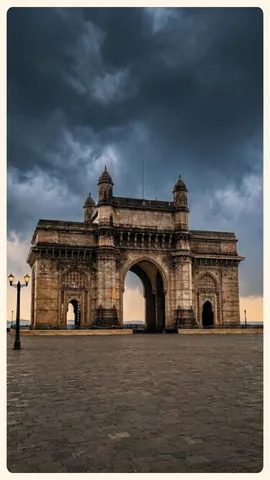
Aqua Line to Cuffe Parade. Walk to the Gateway of India. Lunch at Britannia and Co. in Ballard Estate: berry pulao, salli boti, a family Irani cafe open since 1923. Colaba Causeway. Metro back. Niranta shower before the flight.
The Aqua Line runs from T2 to BKC in around eight minutes, to Cuffe Parade in around forty. The T2 station opened October 2024; the covered bridge to the terminal opened August 2025. Taxis exist. Take the train.
Mumbai's photograph is the ceiling.
Stand at the centre of the T2 check-in hall when the afternoon light is coming through the skylights. Switch to 0.5x wide angle. Point the camera straight up. Frame the peacock-feather coffers above you, thirty columns spreading outward, dichroic disks scattering colour across the stone floor below.
This is the photograph that does not look like an airport. The effect is of something older and grander, a hall built to receive something important. SOM designed it to produce that feeling. You take the photograph and understand that the feeling was the point all along.