Kuala Lumpur International feels fundamentally different from the concrete monoliths of Europe and North America. It is not because the terminals are massive or the air conditioning is relentless. Every major aviation project manages scale. It is because Kisho Kurokawa designed an airport that refuses to conquer the landscape. He invited the landscape inside.
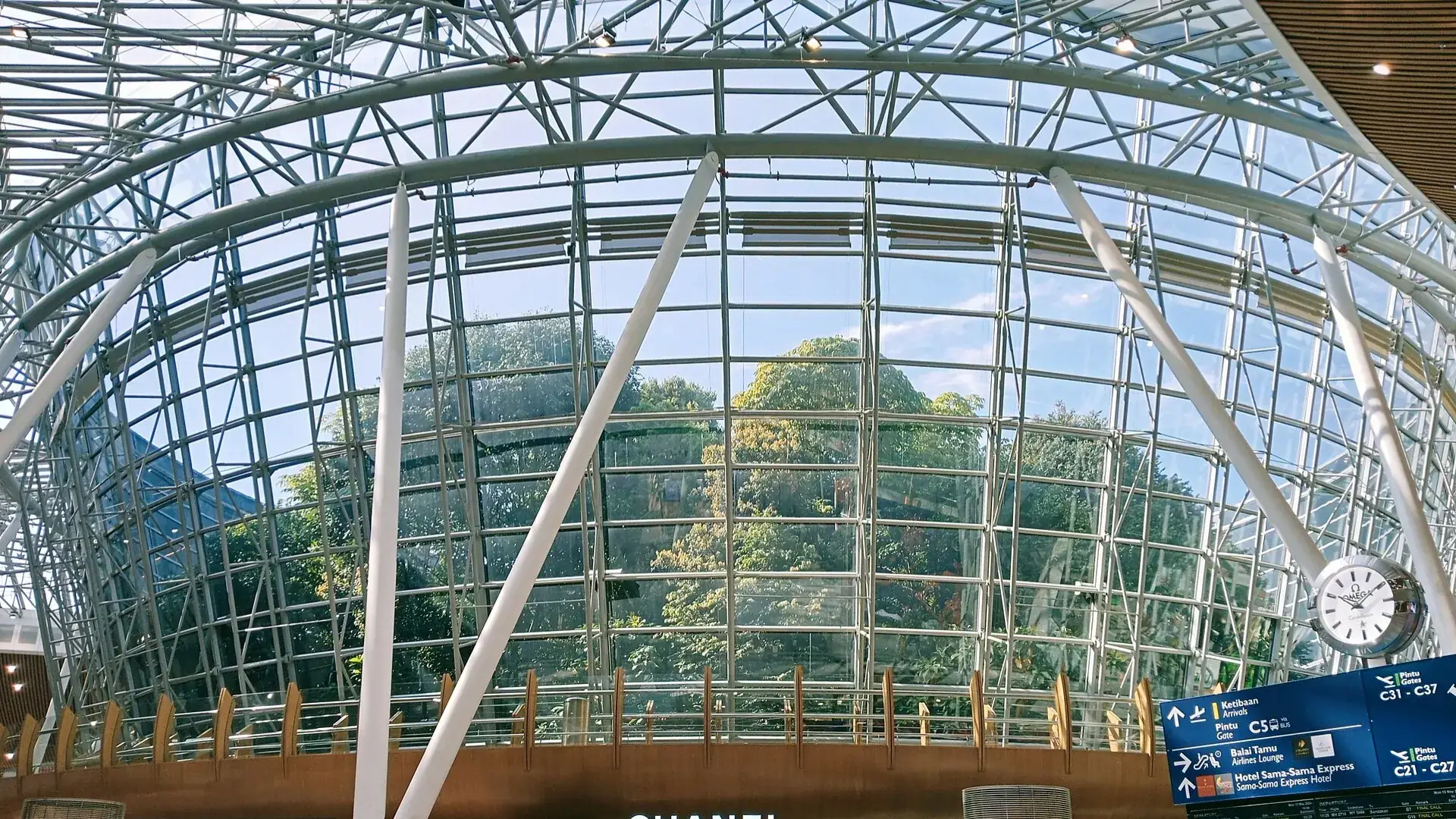
Kuala Lumpur exists to breathe. The design philosophy was clear from the beginning: a forest in the airport, an airport in the forest. The difference is felt the moment you exit the jet bridge. The light is diffused through towering domes engineered to mimic a rainforest canopy. The air smells faintly of earth and rain.
This is the airport that transplanted a living piece of the Malaysian rainforest directly into the centre of its satellite terminal. Commercial real estate logic did not apply. Because in Malaysia, the jungle is the defining reality, and pretending it does not exist outside the glass walls is a failure of imagination. Route through here when your itinerary allows. Let the connection breathe.
A forest in the airport.
An airport in the forest.
Kuala Lumpur's signature is Rimba.
A rainforest sanctuary spanning nearly a thousand square metres sits at the centre of the Terminal 1 Satellite Building, transplanted from the jungles of Sepang. Push through the glass doors and the sterile chill of the terminal disappears, replaced by the heavy, humid air of the tropics. Veils of mist drift through three thousand trees. A waterfall runs beneath an open roof through which actual rain falls. Among the species is the Rafflesia arnoldii, the largest flower on earth, a parasitic plant that blooms three to five days per year and smells of rotting flesh. The rhinoceros hornbill, Malaysia's national bird, is anchored here in sculpture. No other airport on earth does this.

Above the main terminal, Kurokawa's ceiling is hyperbolic paraboloid shells on tapering conical pillars, each shell referencing an Islamic dome while the pillars mimic the growth form of a tropical tree. The roof holds two memories at once. Natural light moves slowly along the full length of the concourse across the day. You notice it when you look up after an hour and everything has shifted.
Outside the perimeter, on Jalan Pekeliling, sits Anjung Spotter: Malaysia's first dedicated plane-spotting deck. Free. Open daily, seven to seven. An open-air platform facing Runway 32L, shaded seating for forty people, widebodies arriving every ten minutes at peak. No boarding pass required. Down the same road is the Sepang International Circuit, where Formula One raced until 2017. Two machines built for speed, side by side in the Malaysian jungle. Most passengers at KLIA have no idea either exists.


The secret to eating well at Kuala Lumpur is ignoring the generic Western franchises and heading directly for the local institutions. The best meal here is exactly what you would eat on the streets of the city.
In the food courts of either terminal, find OldTown White Coffee. Order the signature Ipoh white coffee, served hot with condensed milk, and a plate of kaya butter toast. Thick bread toasted over a charcoal grill, slathered with coconut jam and cold butter, the contrast of hot and cold built into the dish. It is cheap, fast, and the peak of Southeast Asian comfort food. The white coffee is brewed from beans roasted with butter and sugar until they carry a smooth, caramel depth that sits entirely outside the register of any European espresso. Order a second cup before you move.
For a heavier meal, find a Nasi Kandar counter. It is a northern Malaysian staple from Penang, built on deliberate excess: steamed white rice flooded with three types of curry, dark fried chicken, spiced okra, the flavour accumulated from a pot that has been cooking since morning. Under twenty ringgit. It is the most honest meal available behind a security checkpoint at any airport in Asia. For something portable, Nyonya Colors in Terminal 2 sells fresh Nyonya kueh: pulut sambal and angku kueh, the glutinous rice cakes of Peranakan cooking, coloured and dense and sweet in a way that no Western pastry case offers. Buy a box for the flight. For the final drink before the gate, order a Teh Tarik. Pulled black tea with condensed milk, poured between two metal pitchers until a thick foam forms on top. Strong, sweet, a national ritual, and it costs almost nothing.
Here is what the seasoned Kuala Lumpur traveller knows that you do not.
First: check in at the city. The KL City Air Terminal at KL Sentral station allows Malaysia Airlines and Batik Air passengers to drop bags and print boarding passes before leaving the city centre. You ride the twenty-eight-minute KLIA Ekspres completely unburdened, no luggage to wrestle, and walk straight to the security gates. It removes the single most stressful part of the departure process.
Second: the Butterfly Effect. Kuala Lumpur operates a purpose-built calm room in both terminals for neurodivergent passengers and those with hidden disabilities. Adjustable lighting, sensory wall panels, bubble tubes, near-total quiet. It is one of the most genuinely compassionate pieces of airport infrastructure on earth and almost no passenger knows it exists. Ask at any information desk.
Third: the terminal divide. Terminal 1 and Terminal 2 are not connected on foot. They are separate ecosystems a three-minute train ride apart. Booking separate tickets on a full-service carrier and a low-cost carrier means collecting bags, clearing immigration, and taking the KLIA Ekspres across the two-kilometre gap. Factor this into connection times before you book.
Fourth: CapsuleTransit. Minimalist sleeping pods by the hour, airside and landside in both terminals. A three-hour block gives you a private capsule, a locker, a towel, and a hot shower. The pods are soundproofed. Female-only zones operate in both terminals. You buy exactly the rest you need, not a full hotel night you do not. For a six-hour connection with a red-eye behind it, this is the rational choice.
Kuala Lumpur solves the long layover through enclosed, specific spaces designed to reset the body rather than distract it.
The Sama-Sama Express operates transit hotels airside in both Terminal 1 and Terminal 2. No immigration, no bag collection, no public zone navigation. Book a room for a six-hour block, take a high-pressure shower, sleep behind blackout curtains, and return to the concourse a different person. It is the most complete airside sleep solution in Southeast Asia.
For families, the Rimba sanctuary in the Terminal 1 Satellite Building is the practical answer to restless children. The open air, the sound of running water, and the density of the tropical foliage provide an acoustic and sensory break that no screen-based play zone at any other airport achieves. Take the Aerotrain to the satellite terminal, five minutes, and let the jungle do the work until the gate calls.
The Plaza Premium Lounges across both terminals carry full amenities, but the specific value is the Wellness Spa: a thirty-minute neck and shoulder massage bookable without committing to a full lounge day pass. It is a targeted strike against the physical damage of a red-eye. Shower suites are bookable on the same standalone basis. No membership required, walk in and pay.

You have two hours. Or four. Or eight. Or thirteen. Here is what to do.
Aerotrain to the Terminal 1 Satellite Building. Walk the Rimba sanctuary past the waterfall. Kaya toast and Ipoh white coffee at OldTown White Coffee. Teh Tarik before the gate calls.
CapsuleTransit for two hours airside. Shower. Nasi Kandar. Rimba. Buy Nyonya kueh from Terminal 2 for the flight.
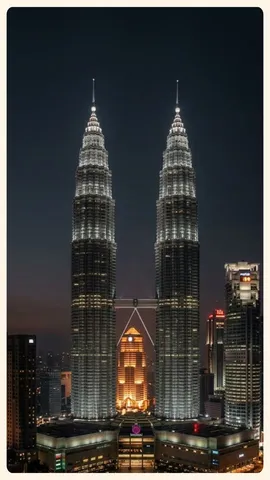
KLIA Ekspres to KL Sentral, twenty-eight minutes. LRT two stops to KLCC. Walk to the Petronas Twin Towers. Eat at the Suria KLCC food court basement. Walk the park. Train back with an hour buffer.
KLIA Ekspres to KL Sentral. Commuter rail to Batu Caves. Climb the two hundred and seventy-two rainbow steps to the temple. Return to Chinatown for claypot chicken rice at the hawker stalls. CapsuleTransit pod and shower before the flight.
The KLIA Ekspres takes twenty-eight minutes to the city centre for fifty-five ringgit. Taxis take an hour and cost significantly more. Take the train.
Kuala Lumpur's photograph is the forest canopy.
Take the Aerotrain to the Satellite Building in Terminal 1. Walk to the exact centre of the Rimba sanctuary, past the waterfall. Point your phone straight up toward the open sky. Switch to 0.5x wide angle. Frame the dense canopy of eighty-six indigenous tree species against the glass and steel geometry of the airport roof above.
This is the photograph that contradicts the logic of global transit. It proves that a massive piece of infrastructure does not have to pave over the tropics. It can build a frame around them. Kurokawa designed KLIA to argue that point. The photograph makes the argument for him.