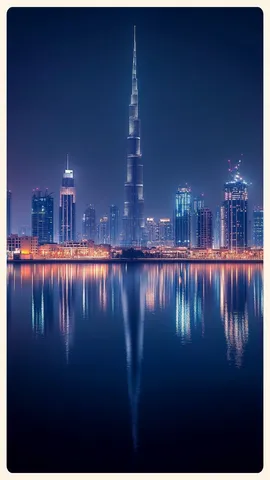
Sixty-five years ago, Dubai was desert. No harbour. No river. No empire's favourite city. One family decided they could build a cosmopolitan capital in the middle of nothing, and they built the airport first. The city followed the runway.
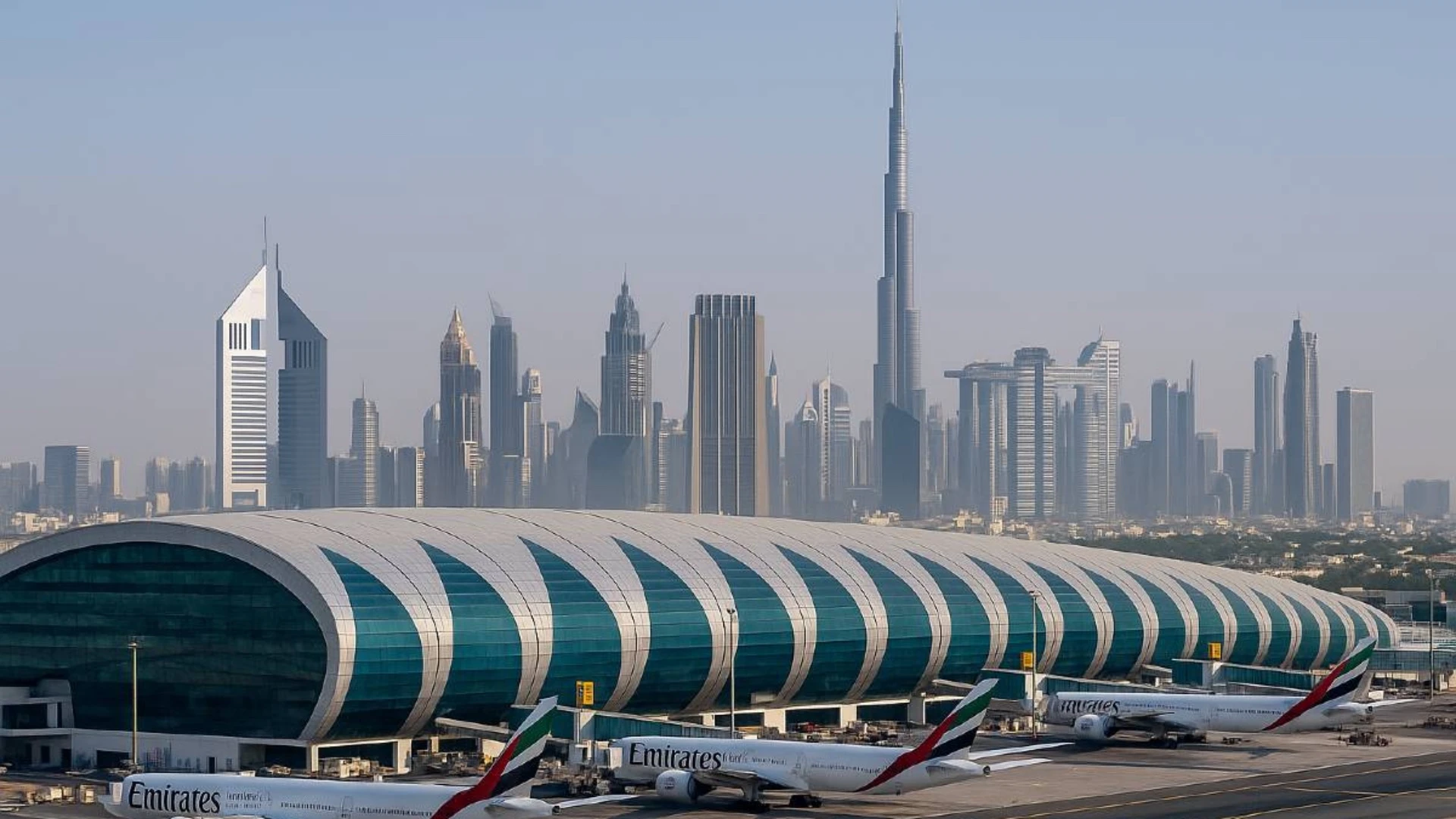
DXB now handles more international passengers than any other airport on Earth, eleven consecutive years. Terminal 3 is the second-largest building on the planet by floor space, and a large portion of it sits underground, beneath the taxiways, because there was no room left above ground to build it. Emirates runs the place. Half of all traffic flies the same airline from a single terminal that was designed around a single aircraft, the A380.
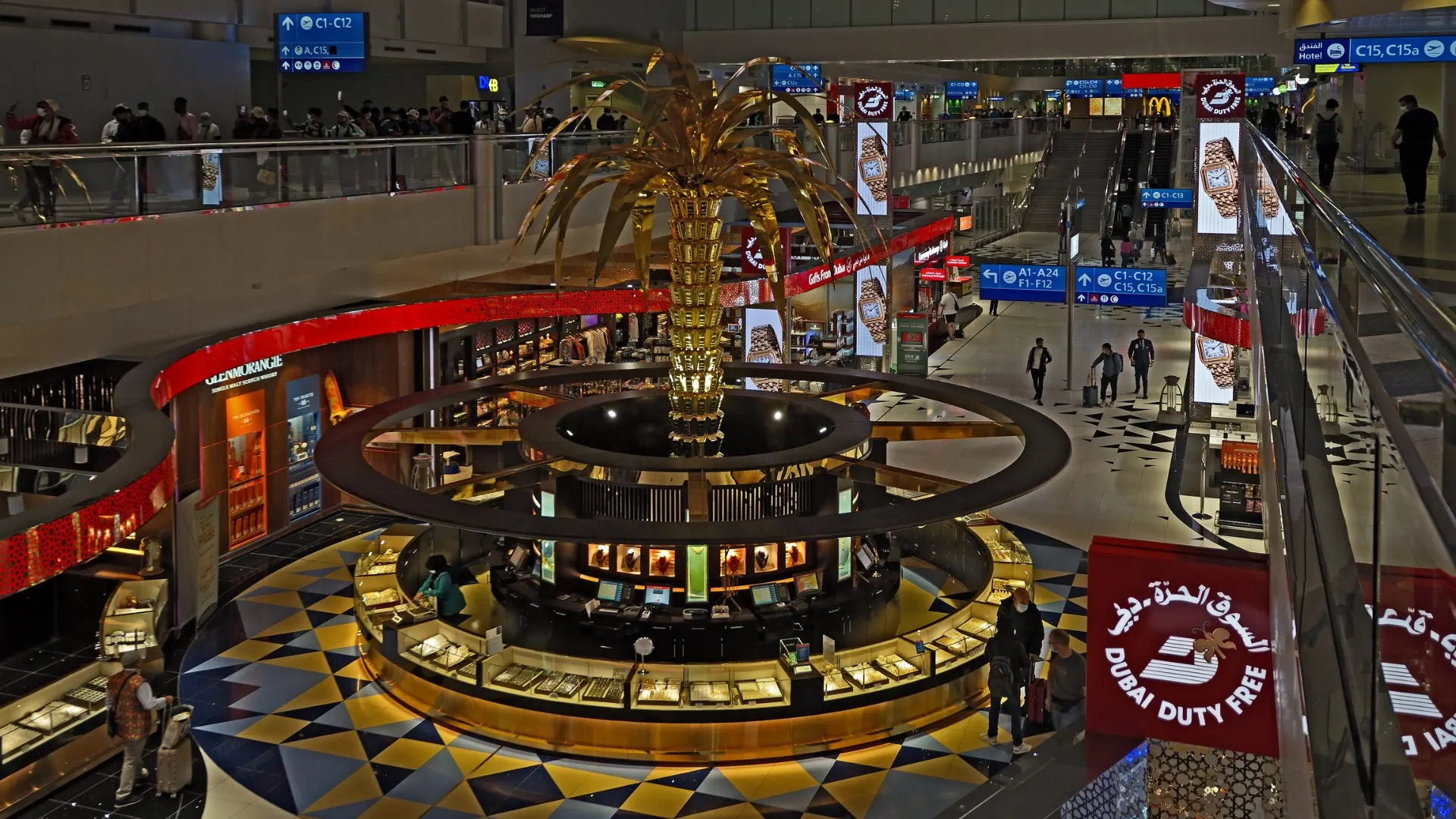
Dubai Duty Free opened in 1983 with first-day sales of forty-four thousand dollars. It now turns over more than two billion dollars a year. The prices are not low. The volume of people passing through is beyond the imagination of the people who built the original terminal.
This is not an airport in a city. This is a city that exists because of an airport. If you are routing through the Middle East on a long-haul connection, choose DXB. And book the longest layover your schedule allows.
Built on desert.
Lifted by ambition.
Dubai's signature is the scale of the excess.
Dubai Duty Free opened in December 1983 with a handful of concessions near the gates. Forty-two years on it is the largest single-location airport retailer on Earth. Walk the concourse and you find four gold shops — Pure Gold, Damas, Joyalukkas, Malabar — selling twenty-two and twenty-four karat bars at live spot prices, the same rates as the Deira souk, duty removed. Eight watch boutiques run alongside: Rolex, Omega, Jaeger-LeCoultre, Cartier, Patek Philippe. The Millennium Millionaire draw has run since 1999. A thousand dirhams buys a ticket for a million dollars. The winners are real. No other duty-free on Earth puts a Patek Philippe next to a gold bar next to a lottery counter and treats all three as equally reasonable purchases.
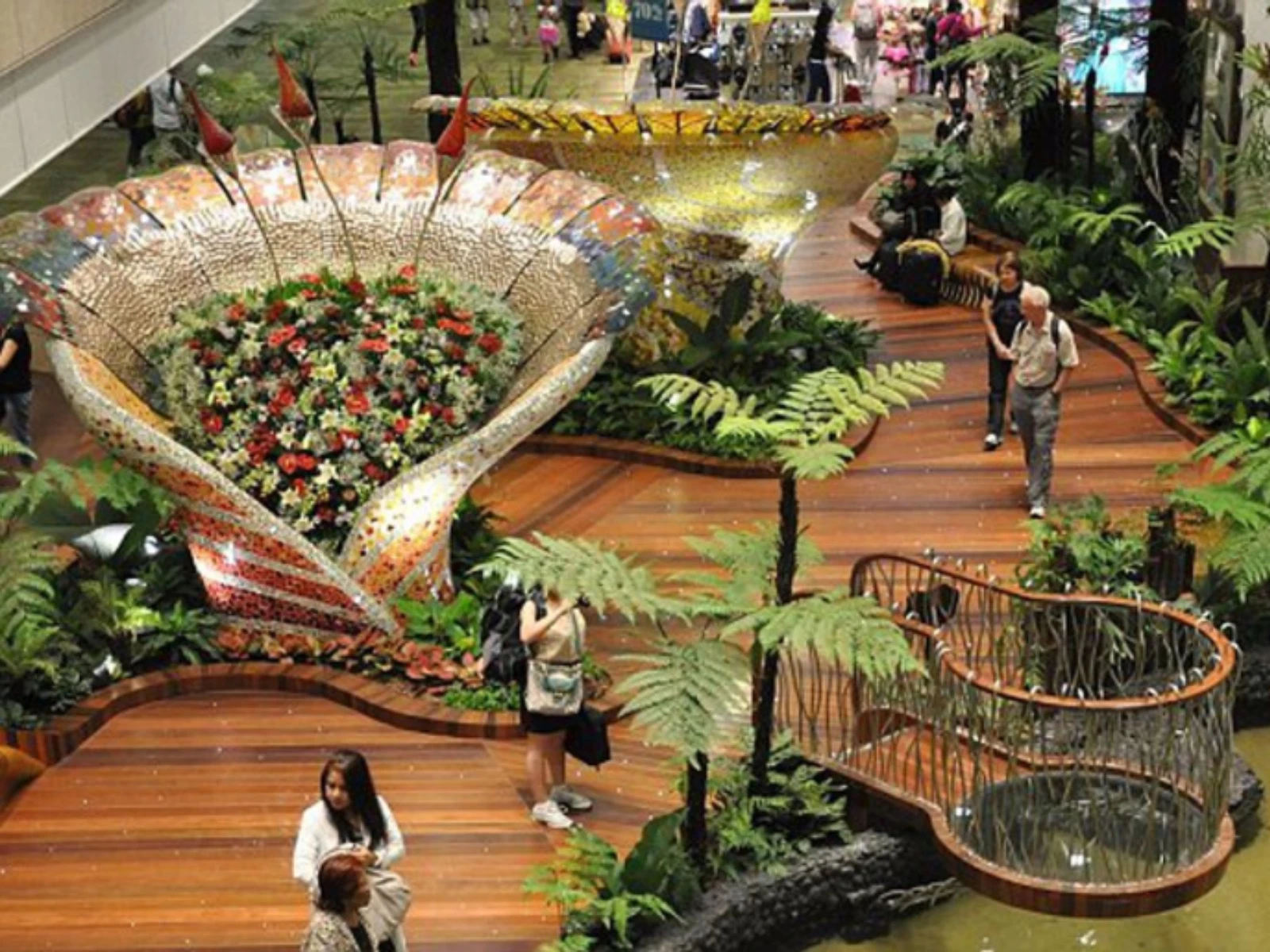
But the shop is only the surface. Between gates B7 and B27 on Concourse B, a Zen Garden runs the length of the concourse. Six thousand trees and plants, a fish pond, benches, the sound of running water. It is free, open around the clock, and almost nobody finds it. At 3am, with the terminal half-empty, it is the quietest room in one of the busiest airports on Earth.
In Concourse B, a permanent FIX Dessert Chocolatier store opened in May 2025. The bar: crispy kataifi, pistachio cream, milk chocolate shell, eighty dirhams, normally only available via Deliveroo in Dubai at two windows a day. Here, you walk in and buy one.
Step out onto Concourse A and look through the glass curtain wall. Between gates A3 and A20, the floodlit apron holds six to eight Emirates A380s at rest, tails in the colours of the UAE flag. From anywhere on the concourse the view is the same: miles of superjumbo, end to end, at the airport that was built to hold them. No other airport on Earth produces this.
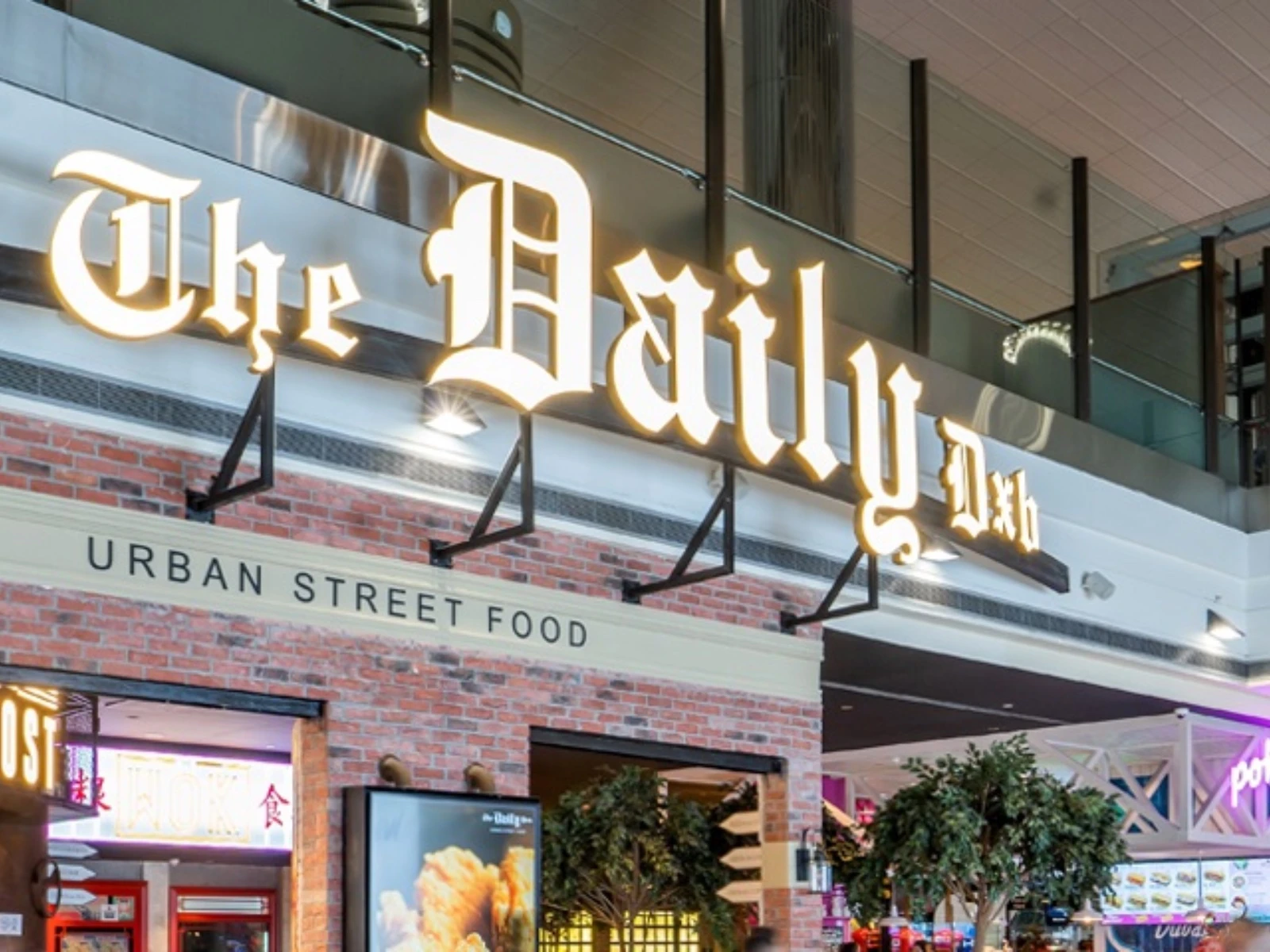
Eating well at DXB means knowing what the city actually eats. Not what it serves to tourists. The answer is in a small coffeehouse modelled on an Old Dubai alleyway, halfway down Concourse C.
S34 Gahwa Mezze Bar, near Gate C35, is the only traditional Emirati coffeehouse inside the terminal. The concept comes from the gahwas (the coffeehouses) found in the sikkas, the narrow lanes of the Al Fahidi neighbourhood in old Dubai. Order the chebab: saffron-and-cardamom pancakes, stacked and drizzled with date syrup, twenty-six dirhams with cream cheese on the side. Order gahwa alongside it. Arabic coffee, cardamom-steeped, served in a handleless finjan cup, no sugar. It is on UNESCO's Intangible Cultural Heritage list. This combination does not exist at any other airport on Earth.
Sawa, born in Dubai and shaped by Beirut, runs its kitchen through shawarma, hummus, muktabal and biryani, each made with local produce and served at the counter across Terminal 1 and Terminal 3. Tranzeet is the twenty-four-hour American diner with an Arabian accent, shakshuka eggs, cinnamon apple pancakes, sumac-spiced shrimp tacos. All'Antico Vinaio carries its schiacciata to Concourse C — the Tuscan flatbread sandwich from the most-reviewed restaurant in the world in 2014, baked fresh and filled to order.
A word on alcohol: it is freely available at DXB, but a pint of beer runs fifteen dollars. Plan accordingly. Most outlets are airside and operate around the clock.
The drink to carry out is gahwa. Find it at S34, in a finjan, with a date on the side. It costs less than the beer, it takes ten minutes, and it tastes like the city it comes from: spare, precise, and completely unapologetic.
Here is what the seasoned DXB traveller knows that you do not.
First: Le Clos. MMI's fine wine and spirits boutique runs nine shops across Terminals 1 and 3, staffed by WSET-accredited sommeliers. Bottles start at twenty-eight dollars and climb into the five figures for Bordeaux first growths. You can order mid-flight via Click & Collect and pick up at the arrivals store next to baggage belt 7. This is the only airport duty-free that reads as a serious wine merchant rather than a retail shelf.
Second: Dubai Connect. If you are flying Emirates on a connection of six to twenty-six hours in Business or First, or eight to twenty-six hours in Economy, and it is the shortest available connection on your itinerary, the airline gives you a complimentary hotel, meals, and airport transfers, free. It is not the Dubai Stopover package. It is buried in Manage My Booking on emirates.com, and most passengers never find it. Book at least twenty-four hours before your inbound flight.
Third: the Emirates Official Store. Flagship on Concourse A, second shop on Concourse B. Scale models of the entire Emirates fleet. First Class amenity kits over the counter. Pilot uniforms for children. For anyone who has ever wanted to bring home a piece of the airline rather than a perfume, this is the stop.
Fourth: the A380 window after midnight. The view between gates A3 and A20 is at its best between eleven at night and two in the morning, when long-haul departures are staged and the full fleet is visible. The apron lights are at full intensity. The tails glow. You will not see this anywhere else on Earth.
A long layover at DXB is a test of endurance. The airport never closes. The lights never dim. Dubai knows this, which is why it has built more places to rest, disappear, and recover than almost any airport on Earth.
For sleep, the Dubai International Hotel inside Terminal 3 rents rooms by the hour, three hours, six hours, or the night. It is airside, past immigration, five hundred rooms, with a spa and pool. For something smaller, Sleepover at Concourse B runs private capsule rooms with showers, in six- eight- and ten-hour blocks, bookable in advance.
For families, the DXB Family Zone between Gates B7 and B8 has a floor modelled on Arabian sand dunes, a climbing wall, baby-changing rooms, and interactive games. Game Space on Concourse B is open twenty-four hours with forty gaming stations and every major console. The world's largest airport LEGO store is in Terminal 3.
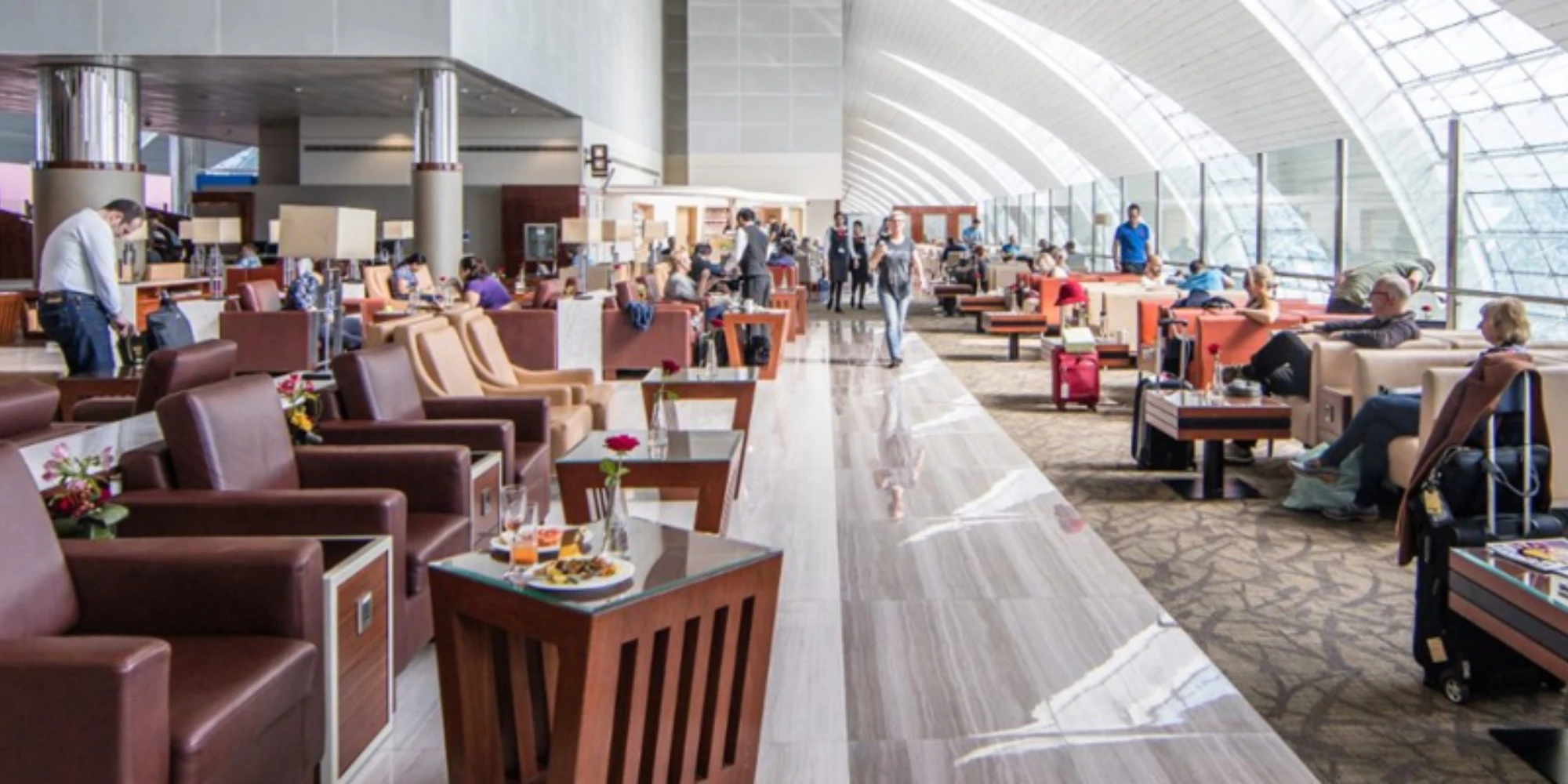
For the business traveller, Emirates operates the world's largest First Class lounge on Concourse A, over a hundred thousand square feet, spanning twenty-four gates, with direct boarding from the lounge floor. Timeless Spa offers complimentary fifteen-minute treatments for First Class passengers. There is a proper cigar lounge, a Le Clos wine room, and a shoe-shine service that does sneakers. For Priority Pass, Ahlan First in Terminal 1 is the consensus pick.
You have two hours. Or four. Or eight. Or thirteen. Here is what to do.
Stay airside. Walk the duty-free. Find the A380 window between gates A3 and A20. Gahwa at S34. Return to gate.
Stay airside. Immigration eats thirty minutes each way. Ride the APM between Concourses A and B. Eat at Tranzeet. Buy a FIX bar. Check Dubai Connect eligibility while you wait.
Clear immigration. Metro Red Line to Burj Khalifa station, twenty-five minutes. Observation deck on the 124th floor. Walk the Mall. Metro back. Budget an hour for re-entry.
Metro to Dubai Mall. Burj Khalifa at sunset. Taxi to Deira: Gold Souk, Spice Souk. Abra across the Creek for one dirham. Dinner at Arabian Tea House in Al Fahidi. Metro back. Shower, sleep, flight.
The Dubai Metro Red Line connects Terminal 3 to the city. Dubai Mall is twenty-five minutes. Deira is fifteen. Taxis to downtown run about fifty dirhams. The Metro is cheaper, faster at peak hours, and runs every few minutes until midnight.
Dubai's photograph is the A380s.
Stand at the glass curtain wall on Concourse A, between gates A3 and A20. Go after eleven at night. The apron is floodlit, six to eight Emirates superjumbos parked nose to tail, tails glowing UAE colours. Switch to 0.5x. Frame the row through the glass.
This is the photograph that does not look like an airport. The effect is of a museum of flight where the exhibits are still running. No other airport on Earth lets you take this picture. Dubai built the world's busiest A380 facility and put it behind a window anyone can walk up to.