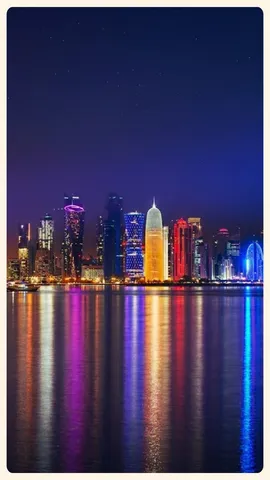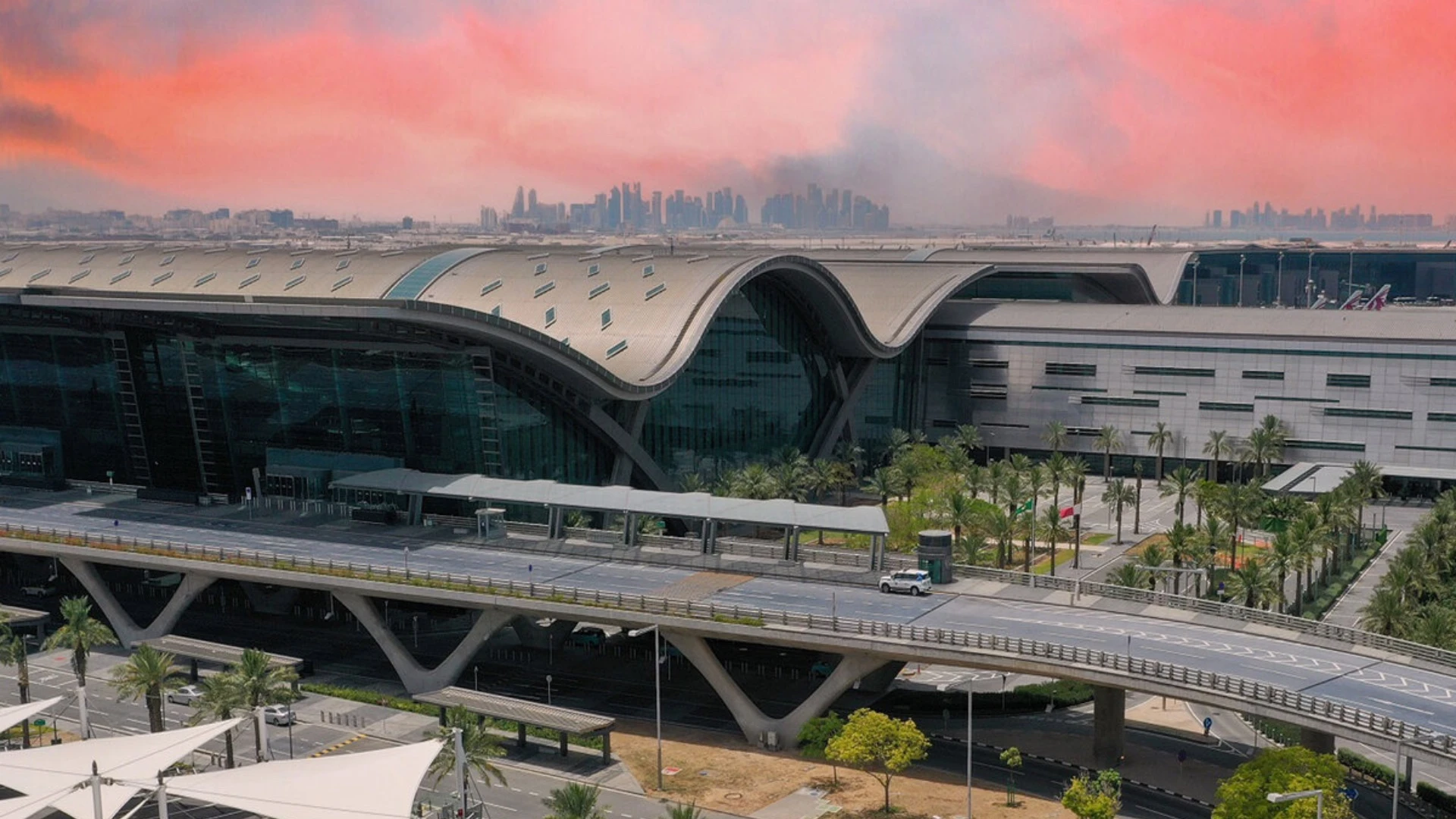
Hamad International has been named the world's best airport three times in four years. It is not because the floors are clean or the lounges have Wagyu. Airports manage that. It is because Hamad was built by a country with a problem: a peninsula the size of Connecticut with no geographic reason to be a global crossroads.
Qatar's answer was to build the airport first and argue the case from there. Walk off the jet bridge and the argument is immediately clear: a six-thousand-square-metre indoor garden growing beneath a grid-shell roof, a twenty-three-foot bronze bear in the departures hall, a Louis Vuitton lounge run by a three-Michelin-star chef. None of these things had to be here. Qatar put them here because a layover needed to become a reason to return.
The airport opened in 2014. A decade later it handles more than fifty-two million passengers a year and has added two new concourses. The pace of ambition has not slowed.
If you have a choice of connections through the Gulf, take the one through Doha. Qatar's transit visa runs ninety-six hours for most nationalities. The airport is the door. The country is the argument.
Planted in desert.
Grown into somewhere.
Hamad's signature is the Orchard.
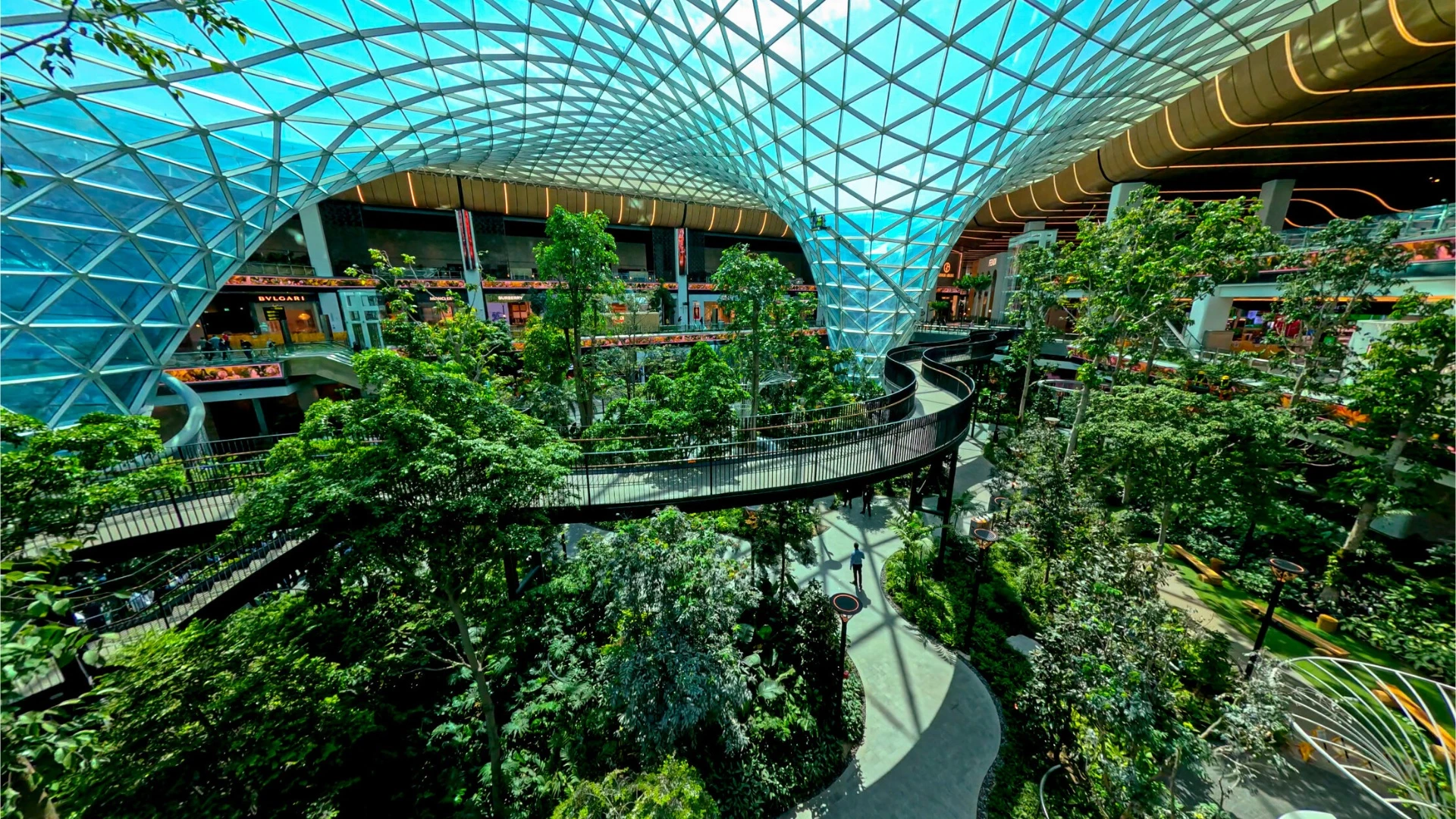
Six thousand square metres of tropical garden growing inside the terminal, under an eighty-five-metre grid-shell roof that filters light without trapping heat. Three hundred trees, twenty-five thousand plants from sustainable forests worldwide. A five-hundred-and-seventy-five-square-metre bio pond at the base, fish visible below the surface. Wrapping the whole thing at two storeys: a 1.2-kilometre LED ribbon by Moment Factory, 169 million pixels of Qatari botanical and architectural themes, synchronising every hour across the full terminal in a minute of transformation. Walkways wind through the trees at ground level. Suspended walkways above offer aerial views through the canopy.
But the Orchard is only the headliner. A train ride south, in the duty-free hall, stands the Lamp Bear. "Untitled (Lamp/Bear)" by Swiss artist Urs Fischer: twenty-three feet of canary-yellow bronze, seated under an oversized lamp. One of three editions in the world. The only one on permanent public display. A Qatari royal bought it at Christie's in 2011 for six point eight million dollars and placed it here so that transit passengers would walk past it on the way to their gate.
Near the Lamp Bear, Souq Al Matar. A reimagining of old Doha's market alleys by Qatari architect Ibrahim M Jaidah. Low arches, narrow sikkas, mashrabiya lattice screens. Inside, Dukkan sells Pafki chips and Jellopy gums; Fwala stocks halwa, dates, and Gulf spices. If the Orchard is Qatar's face to the world, the Souq is its interior.
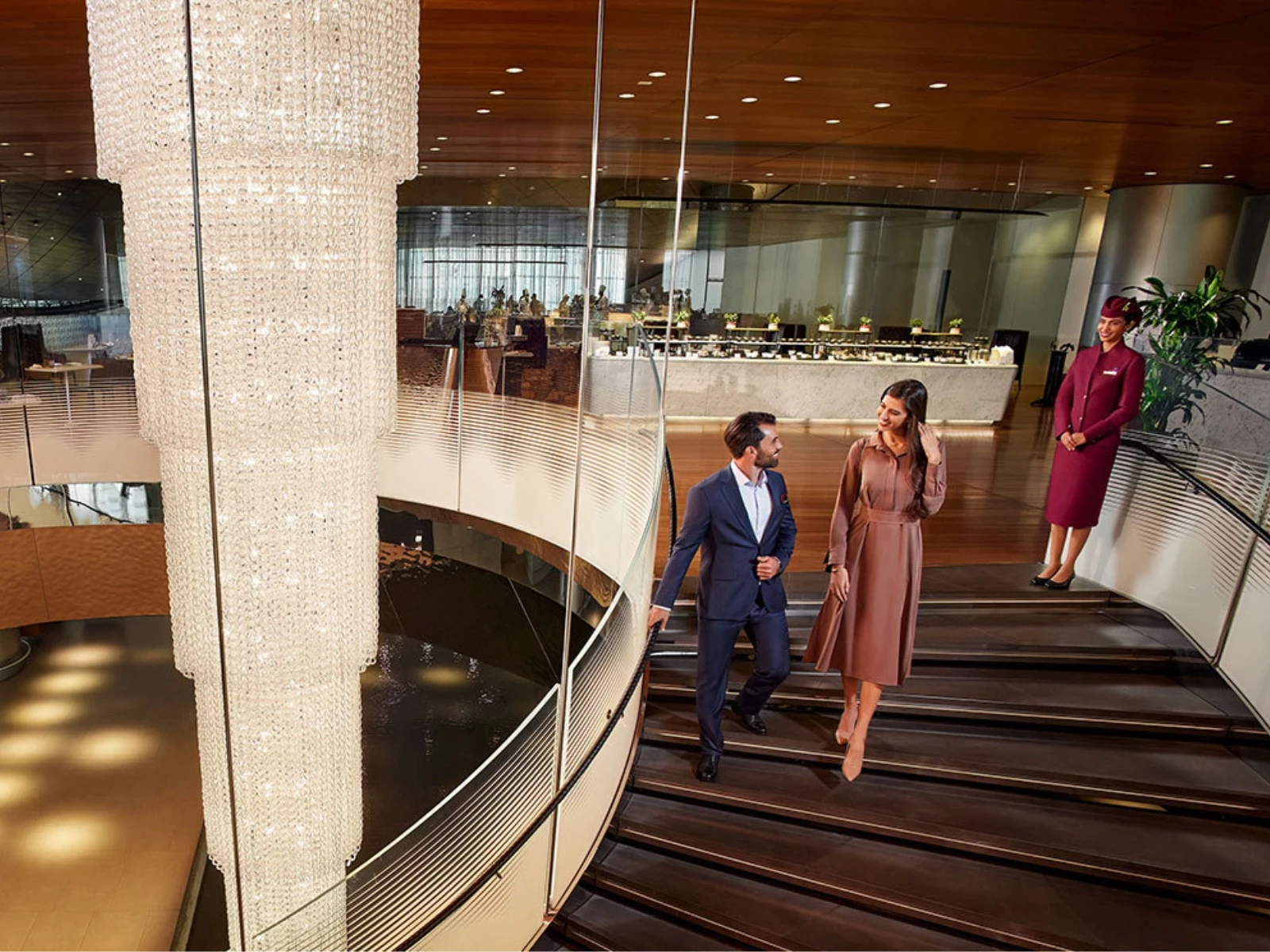
At the north end of Concourse C, above the Orchard, the world's only airport Louis Vuitton lounge. A menu by three-Michelin-star chef Yannick Alléno. Monogrammed trunks at the entrance, a private salon upstairs. For Qatar Airways and oneworld Business Class. For everyone else, it is reason enough to upgrade.
Hamad will feed you at airport prices, and in some places at the prices of a country that takes hospitality seriously. The trick is to know which stalls read like a Qatari home kitchen rather than a hotel menu.
The dish worth planning for is at Daily Chef Noof in the Concourse A Food Park. Chef Noof Al Marri is the most recognised Qatari cook working today: bestselling cookbooks, international television, Qatar Airways Business Class inflight menus, and a restaurant inside the National Museum of Qatar. Her airport menu carries madrouba, the Qatari beaten rice, slow-cooked with chicken and warm Gulf spice into something between a porridge and a pilaf. Machboos made with hamour, the locally caught grouper. Spinach fatayer baked to order. Open twenty-four hours a day.
Jaipur, also on Concourse A, works through the regional breadth of India: lamb curry, butter chicken, chicken biryani, and the restaurant's own Chicken Jaipuri. The menu runs from tandoor to slow braise, sized for a fast connection but not simplified for one.
Baladna on Concourse B pours cold laban, fresh yoghurt, and made-to-order juices straight from the brand's own Qatari dairy farm — the supply chain runs from pasture to tray. Also on Concourse B, Emporio Armani Ristorante plates handmade pastas, creamy risottos and grilled meats in a setting that carries the house's Milan cool into the departures hall. For tea, Harrods opens at four in the morning: six egg dishes, scones, a tea blended by an in-house Tea Tailor. The world's only Harrods outside London, serving breakfast before most of the city wakes up.
Chapati & Karak on Concourse C is where the airport's Qatari street-food culture lives. Karak tea — strongly brewed, sweetened, poured over condensed milk — with fresh cheese chapati or tomato chapati. The drink is everywhere in Doha; this is where to find it airside.
The drink to end on is gahwa. Lightly roasted beans brewed with cardamom, sometimes saffron, poured from a long-spouted dallah into a small handleless finjan. Unsweetened. Always with dates. It is on UNESCO's Intangible Cultural Heritage list. It tastes like exactly where you are.
Here is what the seasoned Hamad traveller knows that you do not.
First: the Stopover. Any passenger on a Qatar Airways, oneworld, or codeshare ticket with a layover of twelve hours or more can book a Discover Qatar hotel for QAR 103 a night, roughly twenty-eight dollars, double occupancy. Four-star. Transfers included. Visa-free for over a hundred nationalities; a transit visa costs QAR 100 at the Discover Qatar desk in Duty Free Plaza South. Book at discoverqatar.qa at least three days ahead. Most passengers sitting in the terminal do not know this exists.
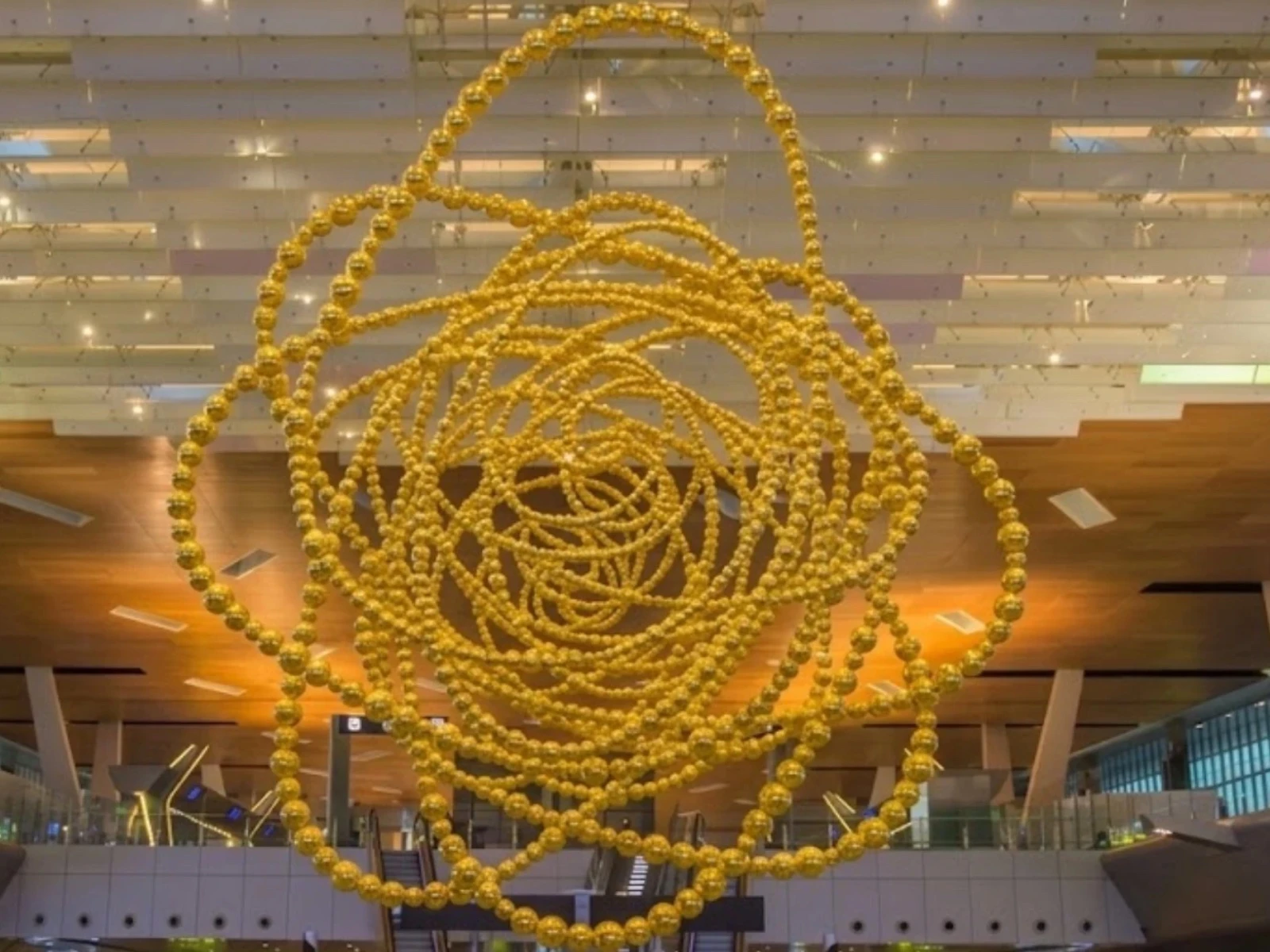
Second: the art tour. Discover Qatar runs a four-hour guided walk through forty permanent installations inside the terminal, from the Lamp Bear to the Othoniel golden astrolabe suspended in the atrium. You do not clear immigration. You do not need a visa. Book at the Discover Qatar desk in Duty Free Plaza South or the North Node on Concourse C. From QAR 115.
Third: Harrods at four in the morning. The Tea Room opens at 4am, which is when most long-haul connections from East to West arrive in Doha. Six egg dishes, scones, and a proper cup of tea. No lounge access required. Walk past the Lamp Bear, turn left.
Fourth: the Cable Liner. Hamad's people mover runs twenty-four hours between the South Plaza, the Orchard, and the new D and E concourses that opened in March 2025. The new concourses are a fifteen-minute walk from central security on foot. The Cable Liner is three. Almost no one uses it because almost no one knows it is there.
Qatar does not think of travellers the way other airports do. In Qatari hospitality, a guest under your roof is owed shelter, food, and ceremony. Hamad is the national reception room. It exists to receive you, not to process you.
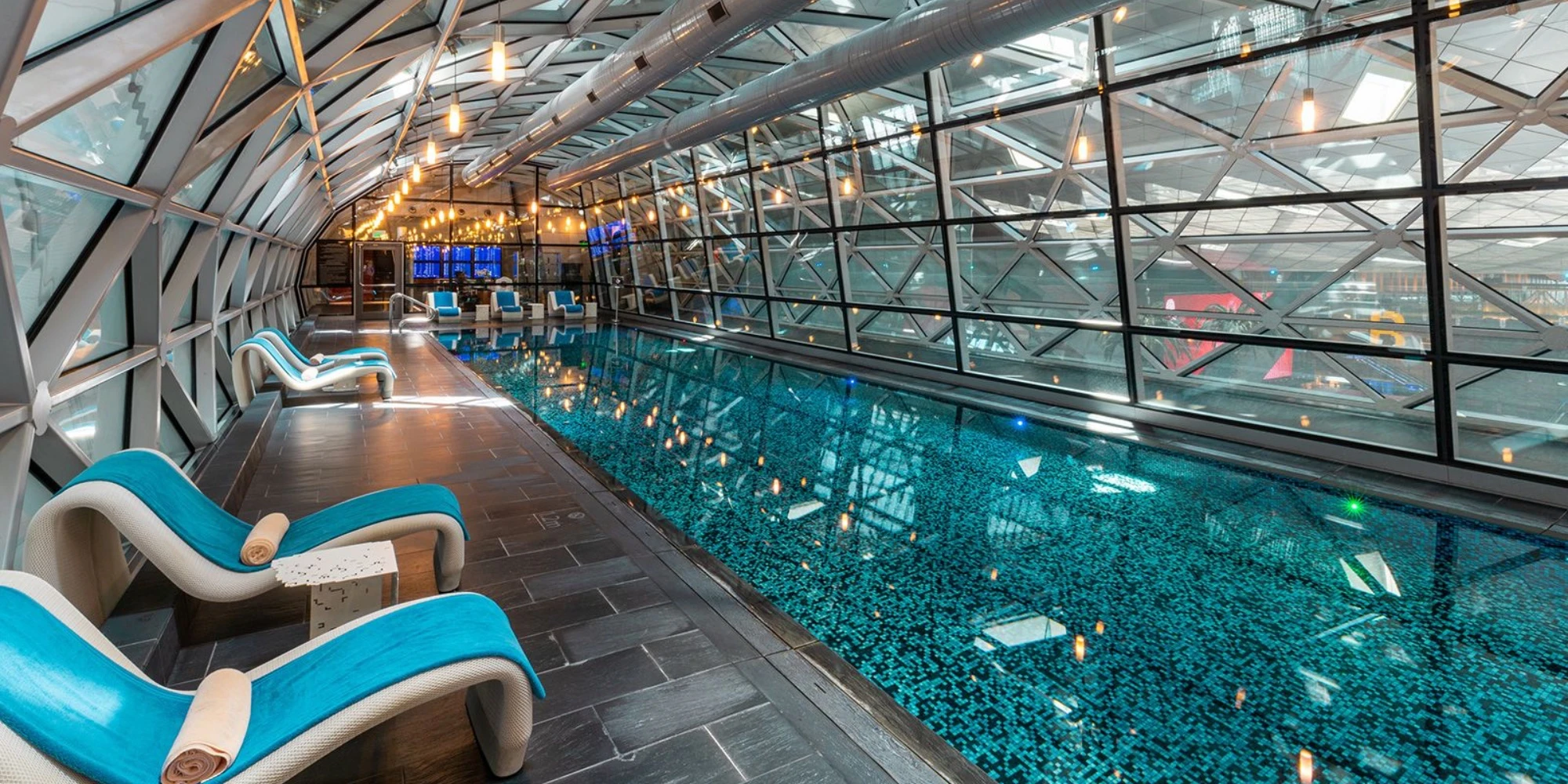
For sleep, the Oryx Airport Hotel sits inside the terminal, airside, with a twenty-five-metre pool, gym, spa, and squash court. Book ahead: it sells out. The Oryx Garden Hotel in the North Plaza has a hundred rooms, opened in 2022, near the new D and E concourses. Sleep 'n' Fly pods in both nodes run by the hour. Free quiet rooms with reclining loungers are scattered through the concourses on a first-come basis.
For families, the Orchard is the airport's best play space: grass, a bio pond, teepee tents, no time limit. Concourses B and D have play zones. Hamleys is airside.
For the business traveller, Al Mourjan Garden above the Orchard is the lounge to reach: floor-to-ceiling glass over the canopy, a Dior spa, quiet pods, the Louis Vuitton salon, and a-la-carte dining. Accessible for Qatar Airways and oneworld Business Class, or from QAR 450 paid. Al Safwa First is the ceiling: Museum of Islamic Art architecture, private rooms, a spa with jacuzzis. For everyone else, Al Maha and Oryx lounges from QAR 200.
You have two hours. Or four. Or eight. Or thirteen. Here is what to do.
Stay airside. Walk to the Orchard at North Plaza. Sit under fifty-foot trees with the bio pond below. Find the Lamp Bear in the duty-free hall. Return to gate having seen something no other airport contains.
Book the airport art tour at the Discover Qatar desk in Duty Free Plaza South. Four hours, QAR 115, no immigration, no visa. Forty installations. No passport stamp.
Clear immigration. Metro Red Line from Hamad Terminal One to Msheireb, twenty minutes, two riyals. Souq Waqif for lunch. Museum of Islamic Art on the corniche, free admission. Metro back with time to spare.
Book the Discover Qatar Stopover from QAR 103. Hotel pool. Museum of Islamic Art. Dinner at IDAM, Alain Ducasse's French-meets-Gulf kitchen inside the MIA. Falcon souk at dusk. Metro back for the flight.
The Metro Red Line runs from Hamad Terminal One to Msheireb in twenty minutes for QAR 2. Karwa taxis to downtown run about fifty riyals and take twenty minutes outside peak hours.
Hamad's photograph is the bear.
Stand in the duty-free hall at the South Plaza, directly in front of the Lamp Bear. Get low. Switch your phone to 0.5x wide angle. Frame twenty-three feet of canary-yellow bronze beneath the oversized lamp, the marble expanse of the terminal stretching behind it. At 0.5x the scale reads correctly: a building-sized bear in a room built to receive the world.
This is the photograph that does not look like an airport. One of three editions on the planet. The only one on permanent public display. Qatar decided that the first thing a visitor should see, walking into the departures hall, was this.